Fresh produce loses 8-15% of its value to temperature abuse before it reaches the consumer, and seafood is even more sensitive. Insulated plastic crates are one of the most cost-effective tools for protecting perishables from the farm gate to the supermarket shelf. This guide explains how cold chain crates work, the insulation technologies available, and how to choose the right system for your distribution network.
For a full breakdown of crate types, sizes and load ratings, see our industrial plastic crates guide.
What Makes a Crate a Cold Chain Crate?
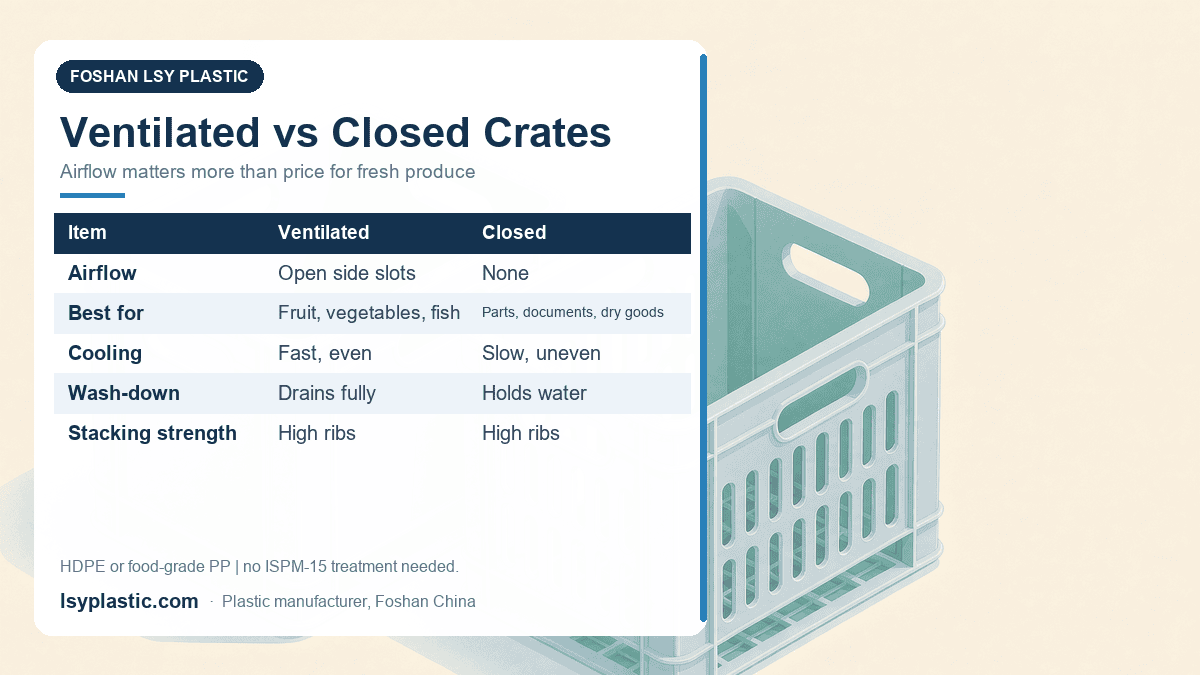
A cold chain crate combines three elements: an insulated body that slows heat transfer, a durable plastic shell that survives stacking and washing, and compatible lids or liners that seal in the cold. Unlike open ventilated crates designed for airflow, insulated crates are built to hold temperature once produce is pre-chilled.
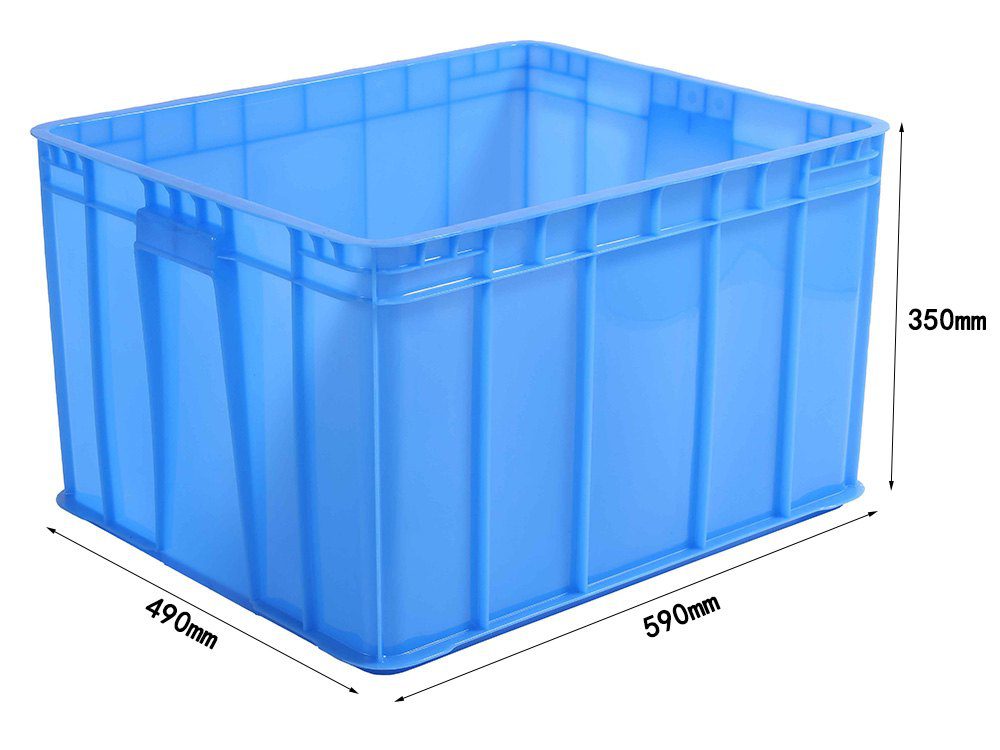
Before choosing insulation, understand how the rest of your plastic containers perform in temperature environments — see our plastic container temperature ratings guide for the safe operating range of HDPE and PP.
How Insulated Crates Work
Insulation slows the three heat transfer mechanisms: conduction through the walls, convection of air inside the crate, and radiation from the environment. Most insulated crates use one of these approaches:
| Insulation Type | How It Works | Typical Holding Time | Best Application |
|---|---|---|---|
| Expanded foam core (EPS/EVA) | Foam layer sandwiched between plastic walls | 6-12 hours | Local distribution, last-mile delivery |
| Vacuum insulated panels (VIP) | Near-vacuum core with reflective barrier | 24-48 hours | Pharma, long-haul, air freight |
| PCM / gel packs + thin-wall crate | Phase-change materials absorb heat | 12-24 hours with gel packs | Seafood, chilled meal delivery |
| Double-wall air gap | Air pocket between shells | 3-6 hours | Short trips, budget solution |
Hygiene Considerations
Food safety is non-negotiable. Look for crates made from food-grade HDPE or PP that tolerate washdown at 60-80°C with detergents and sanitizers. Closed-cell foam cores resist water absorption, preventing bacteria growth inside the walls. Drainage plugs allow water to escape during washdown without compromising insulation.
Applications Across the Cold Chain
Fresh Produce Distribution
Leafy greens, berries, and cut fruit should be held at 0-4°C. Insulated crates with perforated lids maintain humidity while preventing condensation drip. Compared with single-use expanded polystyrene (EPS) boxes, reusable insulated crates pay back in 15-30 trips — and avoid the disposal cost and waste image problem of foam boxes.
Seafood and Fish Transport
Whole fish and fillets require ice contact at 0-2°C. A rigid plastic crate with a sealed insulated lid and internal gel packs keeps fish below 4°C for 12+ hours, even in warm ambient conditions. Drainage channels keep meltwater away from the product while the insulated shell minimizes ice consumption by 30-50%.
Dairy, Meat, and Prepared Meals
For chilled meal delivery and central kitchen distribution, stackable insulated crates with tamper-evident lids protect both temperature and food safety records. Traceability is easier when crates are marked with batch codes and washable RFID tags.
Choosing the Right Cold Chain Crate
Work through these five criteria before purchasing:
- Holding time: Measure your longest unbroken delivery leg. If the crate must hold below 4°C for 10 hours, pick foam core or VIP, not air-gap walls.
- Stackability: Nesting crates save 60-70% space on return trips; stackable crates maximize payload when loaded. Decide which matters more for your route.
- Size and payload: Match crate dimensions to your pallet and vehicle layout. Standard 600x400mm and 800x600mm footprints interlock with Euro pallets and roll cages.
- Washing durability: Confirm the crate survives your washer tunnel cycle (chemicals, temperature, and brush pressure) without cracking or losing insulation.
- Total cost per trip: Divide the crate price by expected trips and add washing and tracking costs. A $25 insulated crate used 200 times costs about $0.13 per trip — far below a $1.20 foam box.
For comparisons of container formats, read our folding vs rigid crate comparison and our stackable vs nestable container guide.
Integrating Crates with Your Cold Chain
Insulated crates work best as part of a system: pre-chill the crate shell, load pre-chilled product, seal the lid, and minimize door-open time in the vehicle. Training staff to “cold load” (never loading warm product into an insulated box) is often the biggest improvement you can make — an insulated crate holds cold, it does not create cold.
Conclusion
Insulated plastic crates cut waste, reduce ice and packaging costs, and improve food safety compliance across the cold chain. Select the insulation type that matches your longest delivery leg, verify food-grade and washdown durability, and calculate cost per trip rather than sticker price.
Need food-grade HDPE/PP crates and containers for your distribution business? FOSHAN LSY Plastic manufactures injection-molded plastic crates, turnover boxes, and food storage containers with 35+ years of experience. Ask us for cold chain crate options or explore the plastic storage containers hub for more guides.
Need reliable plastic crates and turnover boxes? Browse the Turnover Box Series collection and request a quote.
Frequently Asked Questions
What makes a crate a cold chain crate?
An insulated body (often foam or double-wall) that slows heat transfer, keeping produce or seafood within a safe temperature range during transport. It extends the cold chain beyond the reefer.
How do insulated crates work?
The insulation reduces heat gain, and where ice or gel packs are used the design manages meltwater drainage and airflow so the product stays chilled without soaking.
Where are cold chain crates used?
Farm-to-market produce, seafood distribution, dairy, pharmaceutical cold chain and final-mile delivery, especially in hot climates where temperature abuse causes 8 to 15 percent value loss.
How do I choose a cold chain crate?
Match insulation performance, size, food-grade material and cleaning needs to your route. LSY moulds insulated and ventilated crates from food-grade HDPE; no MOQ for domestic orders, overseas orders ship FCL.