In automotive parts logistics, the wrong pallet can cost more than the parts stacked on it. A warped rack load behind a Tier-1 stamping press halts a line that bills $40,000 per minute. Automotive plastic pallets must survive just-in-time deliveries, rack stacking, conveyor automation, and aggressive wash-downs—while still protecting delicate sensors and ECU housings from static discharge. This guide covers exactly what to specify when you source automotive-grade plastic pallets, whether you ship OEM parts to assembly plants, or run an aftermarket service-parts network.
What Makes a Pallet “Automotive Grade”
Automotive buyers typically require:
- Consistent dimensional accuracy under +/-2 mm for conveyor and AGV compatibility.
- High rack load ratings—usually 1,000 kg static and 500-800 kg dynamic.
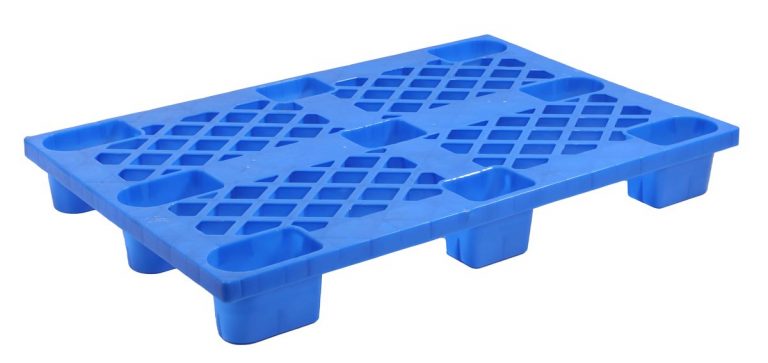
- Surface options: flat top for slip sheets and crates, vented top for airflow or drainage.
- HDPE or PP virgin resin for impact resistance and long life cycles.
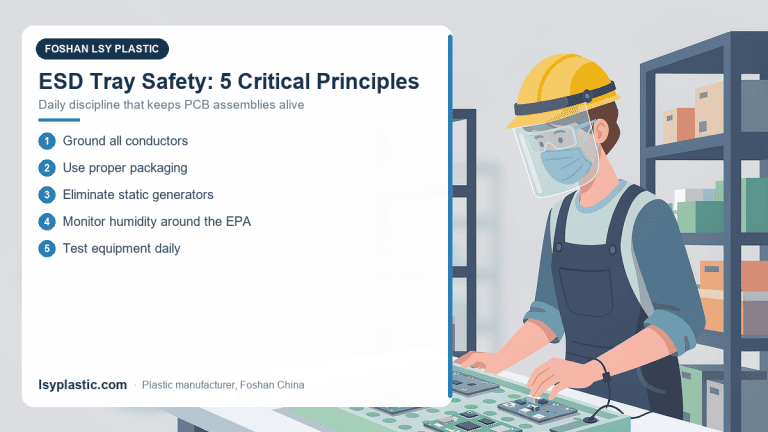
- Optional ESD rating of 10⁴-10⁹ Ω for ECU, sensor, and airbag inflator handling.
The automotive industry drives the most demanding plastic pallet applications outside of pharma cleanrooms. Tier-1 suppliers consistently use premium-grade virgin HDPE because recycled content adds variability that fails automated optical inspection systems.
Common Automotive Pallet Specifications
| Specification | Typical Range | Why It Matters |
|---|---|---|
| Static load | 4,000 – 6,000 kg | Long-term rack storage support |
| Dynamic load | 1,000 – 1,500 kg | Forklift handling on trucks |
| Rack load | 800 – 1,200 kg | Pushback and flow-rack storage |
| Material | Virgin HDPE or PP | Impact and cycle-life stability |
| Color | Black standard, custom brand colors optional | Pool tracking and OEM identification |
| Surface | Flat or vented | Depends on whether loads are crated or loose |
| ESD rating | 10⁴-10⁹ Ω (optional) | Required for ECU and airbag inflator parts |
Static, dynamic, and rack load ratings differ across suppliers—always test against your specific racking system. For a primer on these distinctions, see our plastic pallet load capacity guide.
Plastic vs Wood in Automotive Plants
Wood was the historical default for car plants; most assembly lines have shifted to HDPE for three reasons:
- No splinters or nails. Wood damages wiring harnesses, scratches paint trays, and triggers OSHA reports.
- Uniform dimensions. AGVs, conveyors, and ASRS systems depend on repeatable sizing.
- Easier export. For cross-border shipments to North America, plastic avoids the ISPM-15 heat-treatment compliance wood requires. See our ISPM-15 export compliance guide.
The drawback: plastic has a higher upfront cost. The lifecycle math typically shows break-even in 18-30 months for high-rotation auto parts, driven by repair cost, lost product damage, and reusable pool lifetime. For a side-by-side look at the alternatives, review our plastic vs wooden pallets comparison.
Forklift Compatibility
Automotive DCs typically use electric forklifts with single or double pallet handlers, AGV tuggers, and conveyor transfer systems. Standard 1,100 x 1,100 mm and 1,200 x 1,000 mm footprints cover most European, Asian, and US racking systems. For multi-size compatibility, see our plastic pallet sizes and dimensions guide.
If you run automated storage, ask the pallet supplier for a sample fleet to validate dimensional accuracy over 1,000+ cycles. Reputable suppliers will share test data on camber, twist, and deck deflection. For handling best practices, see our plastic pallet forklift safety guide.
ESD Protection for Sensitive Components
ECU housings, airbag inflators, camera modules, radar sensors, and lithium battery packs all require electrostatic protection. A standard HDPE pallet can carry 10¹²-10¹⁵ Ω surface resistance, which is far too high to safely drain static. Anti-static or conductive HDPE with a 10⁴-10⁹ Ω rating is necessary.
| Component Class | ESD Rating Required | Application Example |
|---|---|---|
| ECU / airbag inflator | Conductive (10⁴-10⁶ Ω) | Powertrain control modules |
| Camera / radar / sensor | Static-dissipative (10⁶-10⁹ Ω) | ADAS modules |
| General parts | Anti-static coating (10⁹-10¹¹ Ω) | Trim, fasteners, brackets |
| Body metal parts | None required | Steel stampings, exhaust hangers |
For deeper coverage of ESD options for electronics manufacturing, see our ESD plastic pallet selection guide, and explore our anti-static industrial series for conductive and static-dissipative bins.
Sourcing From China OEM Suppliers
Most plastic pallets used in North American and European automotive plants are now sourced from Asian manufacturers, where vertical integration and molding capacity give a 15-25% cost advantage over domestic suppliers. The risks are well documented: dimensional variance, recycled-content substitution, and inconsistent color matching.
When sourcing, require:
- Resin traceability: virgin material certificates with melt-flow index.
- Dimensional QC report with mean and standard deviation.
- Load test report from an independent lab.
- Customer references in the auto industry.
LSY Plastic has supplied automotive pallets to Tier-1 stamping plants, Tier-2 ECU assembly, and aftermarket parts distributors for over 15 years. Our 35+ years of injection molding and full-resin traceability set us apart from trading companies. For sourcing advice, see our China custom injection molding OEM guide, and explore our material handling plastic pallet line.
Sample Specification Sheet for an Automotive Pallet
A finished specification sheet should cover:
| Parameter | Recommended Value |
|---|---|
| Footprint | 1,200 x 1,000 mm or 1,100 x 1,100 mm |
| Material | Virgin HDPE, food-grade optional |
| Top deck | Flat, smooth surface |
| Bottom deck | 3 runners or 9 leg, rackable |
| Static load | 5,000 kg minimum |
| Dynamic load | 1,200 kg minimum |
| Rack load | 1,000 kg minimum |
| ESD rating | 10⁴-10⁹ Ω (optional) |
| Color | Black standard or custom brand color |
| Traceability | Lot number molded into rim |
See the Pallet hub for the full range and specifications.
If you do not have a written spec, your supplier is essentially designing your pallet for you.
Lifecycle Cost and Sustainability
Automotive supply chains are under pressure to reduce Scope 3 emissions and improve circularity. Plastic pallets are 100% recyclable at end of life. Most Tier-1 OEMs now run closed-loop pools and report carbon savings of 30-50% compared to single-trip wood. For sustainability details, see our plastic pallet recycling guide.
Get a Quote
Buying automotive plastic pallets requires more than a price list—you need a partner who understands your part mix, your rack system, and your ESD requirements. Send us your specification, or ask us to propose one.
Contact LSY Plastic:
WhatsApp: +86 19311059570
Email: fstyx01@lsyplastic.com
Browse our plastic pallets product range or send a quote request.
Frequently Asked Questions
What makes a pallet automotive grade?
It must hold its racked and dynamic ratings under just-in-time loads, survive conveyor and robotic handling, and often provide ESD protection for sensitive components such as sensors and ECU housings. Automotive buyers specify the exact static, dynamic and racked ratings plus material and ESD band.
Plastic or wood pallets in automotive plants?
Plastic wins on consistency, hygiene and damage prevention: it does not splinter or shed nails that damage parts, keeps consistent dimensions for automation, and is ISPM-15 exempt for cross-border parts flows. Wood only suits low-value one-way loads.
Do automotive pallets need ESD protection?
Where pallets carry electronics, sensors or ECUs, yes. Choose conductive or dissipative material with a controlled surface resistance (for example about 10^4 to 10^9 ohms for dissipative) and confirm batch test data names the model.
Why source automotive pallets from a China OEM?
A manufacturer like LSY machines the mould and controls the resin, so you can specify footprint, deck, load rating and ESD band and keep them consistent batch to batch. Samples at cost price; overseas orders ship FCL.