
Stacking plastic crates on pallets seems simple until a load shifts in transit and damages product. The right layer pattern, pallet size and strapping method can double your stack stability and cut freight damage. In this guide we show you how to stack plastic crates on pallets for warehouse storage, distribution and export shipping.
Before you stack, make sure your crate and pallet are matched. Read our Plastic Pallet FAQ Hub for pallet sizing basics, and see our article on Euro container sizes for common crate footprints.
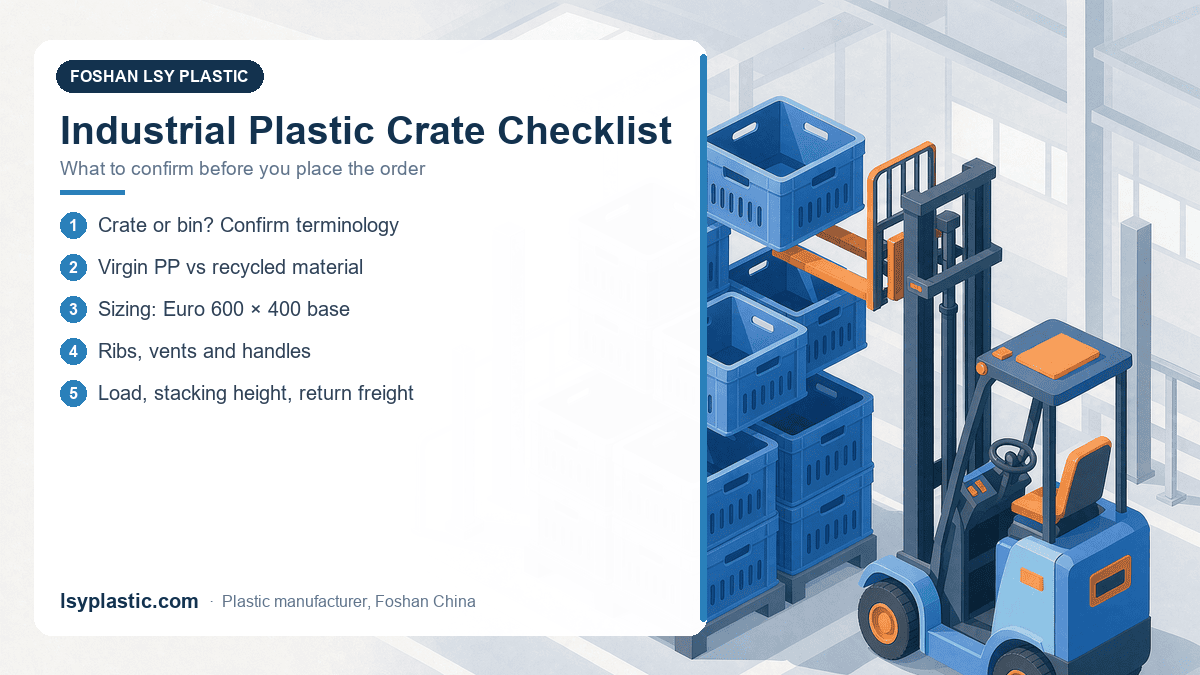
Start With the Right Pallet
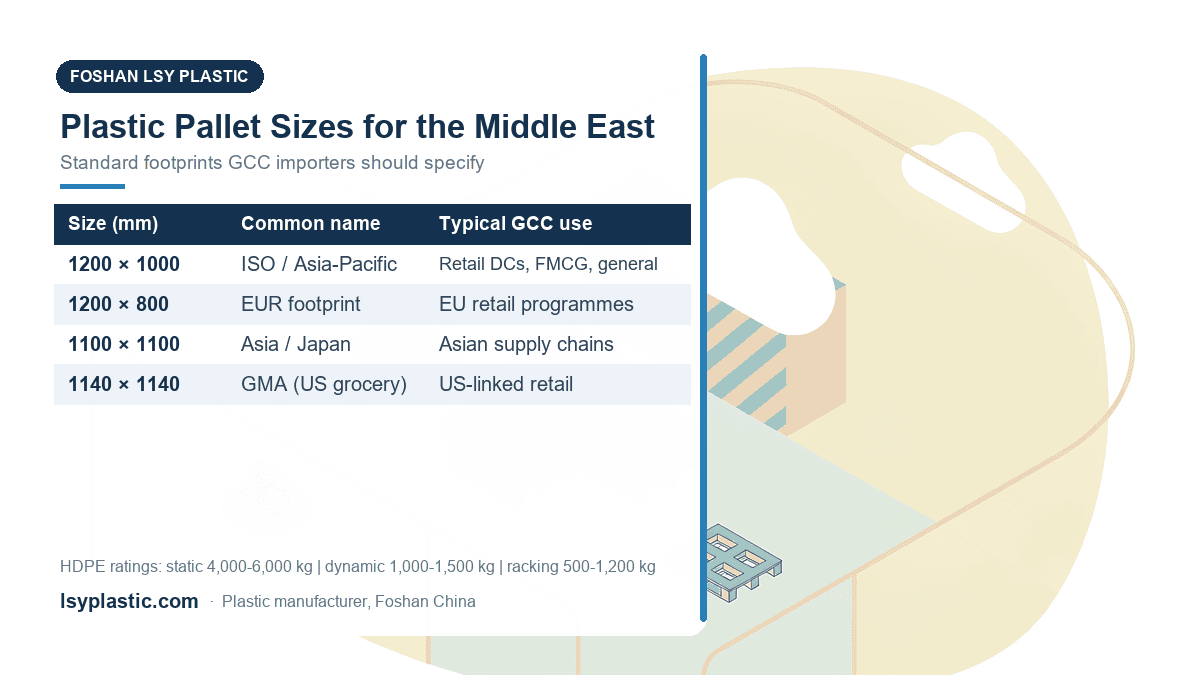
The pallet must be large enough to support every crate in the bottom layer. A 1,200 x 1,000 mm pallet fits four 600 x 400 mm Euro crates side by side, while a 1,200 x 800 mm pallet fits two 600 x 400 mm crates along the long side. If the crate overhangs the pallet edge, it is far more likely to be crushed by strapping or fork tines.
Choose a pallet with a flat deck rather than open slats, because flat decks distribute weight evenly and prevent crate feet from catching. For heavy produce or dairy crates, a nine-leg or chuan-style pallet with closed deck works well. If you store the pallet in a rack, confirm the dynamic and rack load ratings before loading.
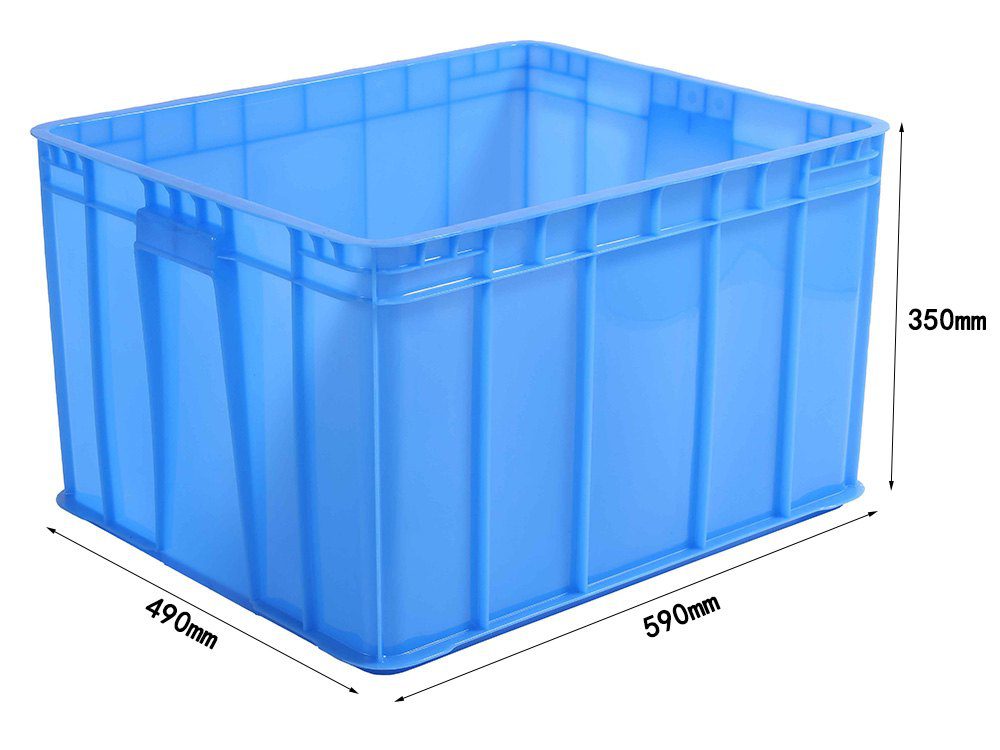
Three Layer Patterns for Stacking Crates
1. Column Stacking
Column stacking places every crate directly above the one below, forming straight vertical columns. This pattern gives the highest compression strength because each crate wall supports the weight directly. It is the best choice for rigid crates with consistent dimensions, such as dairy crates, bakery trays and beverage boxes.
The weakness of column stacking is lateral stability. If a fork truck turns sharply or the trailer sways, the columns can tilt as one unit. Always secure column stacks with stretch wrap or corner boards.
2. Interlocked Stacking
In interlocked stacking, each layer is rotated 90 degrees so the crates cross over the gaps below. This creates a more stable, interwoven structure that resists side-to-side movement. It works well for nested crates and lighter loads.
See the Crate hub for the full range and specifications.
See the Pallet hub for the full range and specifications.
The trade-off is load distribution. The top crate may sit on the lid corners of two lower crates rather than on their strongest walls. For heavy loads, column stacking with good wrapping is usually safer than interlocked stacking without it.
3. Bonded or Strapped Layers
For high-value or export shipments, use a combination of column stacking plus strapping. Place crates in columns, add a layer pad or slip sheet between every second layer, then apply stretch wrap with the correct tension. For ocean freight, consider adding corner boards and poly strapping.
How Many Crates Fit on a Pallet?
| Crate size (mm) | Pallet size (mm) | Crates per layer | Typical layers | Total crates |
|---|---|---|---|---|
| 600 x 400 | 1,200 x 1,000 | 4 or 5 | 5–7 | 20–35 |
| 600 x 400 | 1,200 x 800 | 2–3 | 5–7 | 10–21 |
| 400 x 300 | 1,200 x 1,000 | 8–10 | 6–8 | 48–80 |
| 500 x 360 | 1,200 x 1,000 | 6–7 | 5–7 | 30–49 |
Load Limits and Center of Gravity
Never exceed the pallet’s dynamic load rating. A pallet rated at 1,500 kg dynamic load should carry no more than that total including the weight of the crates and product. Keep the center of gravity low by placing the heaviest full crates on the bottom and lighter or empty crates on top.
For double-stacked pallets in a container, the bottom pallet must support the full weight of the top pallet plus its load. If you ship pallets in containers, see our guide to pallets per container.
Stability Tips That Reduce Damage
- Use slip sheets between layers to stop crates from sliding.
- Wrap from bottom to top with at least 50 percent overlap.
- Add corner boards for loads over 500 kg or for export.
- Do not pyramid-stack smaller crates on top without a stable base.
- Check crate nesting feet; they should lock into the lid below.
Common Stacking Mistakes
The most common mistakes are overhanging crates, mixed sizes in one column, and ignoring the pallet load rating. Mixed sizes create uneven pressure points that can crack lids. Overhang exposes crates to fork damage. And stacking to the ceiling without knowing the pallet rating risks collapse in the rack.
Also avoid interlocking heavy crates. The rotated layer puts point loads on lid corners instead of walls, which can cause lids to fail under static pressure over time.
Conclusion
Stacking plastic crates on pallets is part art and part engineering. Match the crate footprint to the pallet, choose the right layer pattern for your load, and secure the stack before it moves. With these steps you can cut damage, increase container utilization, and keep warehouse staff safe.
Need crates and pallets that stack together? Message LSY Plastic on WhatsApp +86 19311059570 or email fstyx01@lsyplastic.com for sizing and FCL export options.
Related reading: plastic pallets hub — pallet sizes, materials, load ratings and export guides.
Need reliable plastic pallets? Browse the Plastic Pallets collection and request a quote.
More industrial crate guides
- 600×400 Plastic Crate Chart: Ventilation & Shelf Life
- Poultry Crate Layer Pad: 5 Sizes for Egg & Live-Bird Hauling
- Returnable Plastic Crates vs Cardboard for Produce Shipping



