
Most buyers compare plastic pallets by size, load capacity and price, but fewer ask how the pallet was actually made. The manufacturing process affects wall thickness, consistency, cost and even how the pallet behaves in racking or cold storage. At LSY Plastic, we produce pallets by injection molding because it gives the best strength-to-weight balance for warehouse and logistics use, but blow molding and thermoforming also have their place.
In this guide we explain the three main ways plastic pallets are manufactured, what each method means for performance, and how to match the process to your order. If you need a quick reference, see our Plastic Pallet FAQ Hub or read our comparison of HDPE vs PP pallet materials.
Three Main Ways to Make a Plastic Pallet
1. Injection Molding
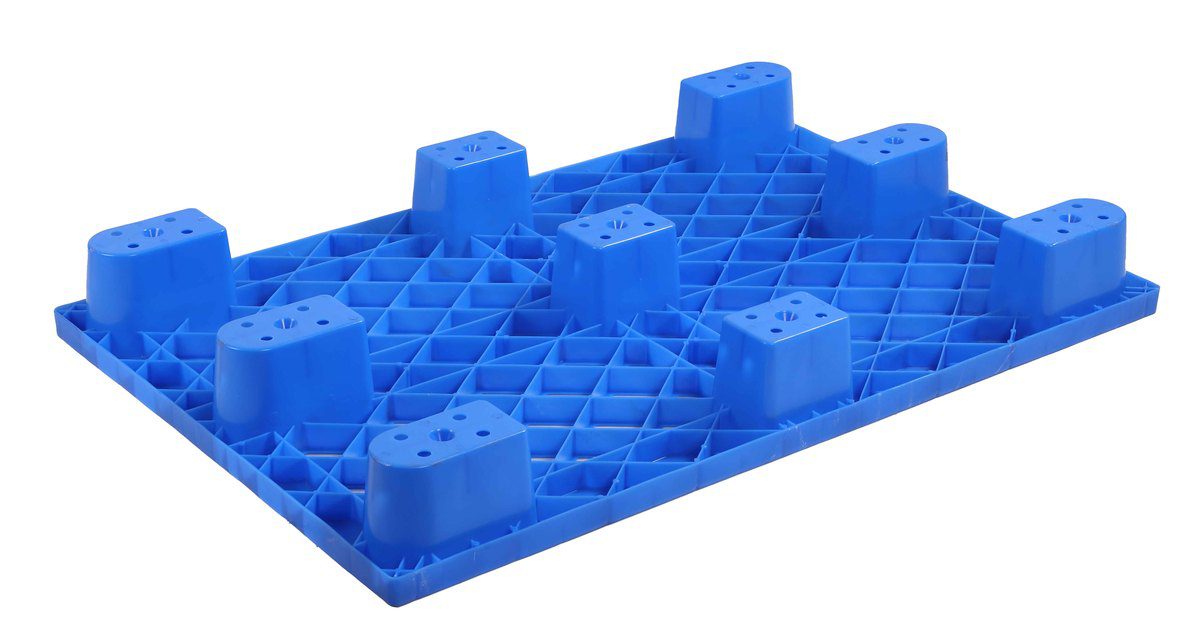
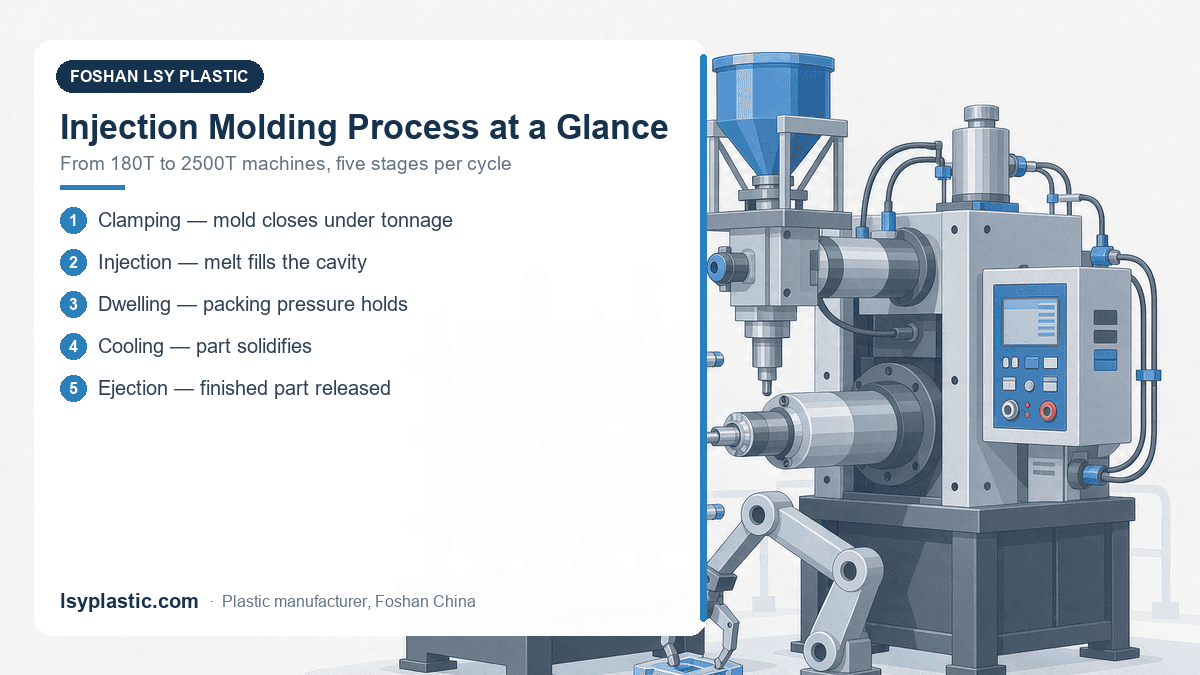
Injection molding is the most common process for high-performance plastic pallets. Molten HDPE or PP is injected into a steel mold under high pressure, cooled, and ejected as a solid one-piece deck and base. The result is a pallet with uniform wall thickness, sharp corners, and consistent dimensional tolerances.
Because the steel mold is precision-machined, injection molding can produce complex bottom structures such as nine-leg, chuan-style (three-runner) and tian-style (full-perimeter) designs. It also supports steel reinforcement inserts and anti-slip plugs. The downside is tooling cost: a new mold can cost several thousand dollars and take several weeks. For this reason, injection molding is most economical at volumes above a few hundred pieces or when you plan to reuse the mold for repeat orders.
2. Blow Molding
Blow molding forms a hollow pallet by extruding a tube of molten plastic and inflating it inside a mold. The walls are thinner and the pallet is lighter than an injection-molded equivalent, which can reduce freight cost and make manual handling easier. Blow-molded pallets are common in one-way export, retail display, and light-duty warehouse use.
The hollow structure also provides some cushioning against impact, but it limits load-bearing capacity and racking suitability. If you need a pallet for heavy rack storage or long-term reuse, injection molding is usually the better choice. Blow molding tooling is generally cheaper than injection molding, so it can work for smaller test batches.
3. Thermoforming (Vacuum Forming)
Thermoforming heats a flat sheet of plastic until it is soft, then pulls it over a mold with vacuum pressure. The process is fast and the tooling is relatively inexpensive, which makes it attractive for custom sizes, low volumes, and special shapes such as display pallets or trays.
See the Pallet hub for the full range and specifications.
See the Injection molding hub for the full range and specifications.
However, thermoformed pallets have thinner walls and lower impact resistance. They are best for light, flat loads and short-term use. At LSY Plastic we do not typically recommend thermoforming for standard warehouse pallets, but we can advise when a custom thermoformed tray makes sense for your product.
Manufacturing Process Comparison
| Feature | Injection Molding | Blow Molding | Thermoforming |
|---|---|---|---|
| Typical material | HDPE, PP, recycled blends | HDPE | ABS, HIPS, PET |
| Wall structure | Solid, uniform | Hollow | Thin, single skin |
| Load capacity | High (1,000–6,000 kg static) | Medium (500–1,500 kg static) | Low (200–500 kg static) |
| Tooling cost | High | Medium | Low |
| Best for | Heavy reuse, racking, automation | Light export, retail | Custom trays, low volume |
How the Process Affects Pallet Performance
The manufacturing process determines three things that buyers often overlook: dimensional accuracy, impact resistance, and long-term creep.
Dimensional accuracy. Injection molding holds tight tolerances, which matters if you use conveyors, automated storage and retrieval systems (AS/RS), or RFID tracking mounts. Blow molding and thermoforming have wider tolerances and can warp over time.
Impact resistance. Solid injection-molded corners resist fork damage better than hollow blow-molded walls. If your operation has frequent forklift impacts, choose a solid design.
Creep. Under constant rack load, all plastics slowly deform. Injection-molded HDPE with steel reinforcement offers the lowest creep, while thin thermoformed pallets should not be racked at all. For more on rack ratings, read our guide to plastic pallets for racking systems.
Which Process Is Right for Your Order?
Use this decision tree:
- Heavy warehouse use, racking, automation, repeated trips: injection-molded HDPE or PP pallet with steel reinforcement if needed.
- One-way export, retail floor display, light loads: blow-molded pallet to save weight and freight cost.
- Custom tray, low volume, special footprint: thermoformed pallet or vacuum-formed insert.
At LSY Plastic we specialize in injection molding for hotel and logistics products. Our plant runs JSW, Mitsubishi and NSC machines from 180T to 2500T, so we can produce everything from small parts bins up to large rackable pallets. If you are sourcing pallets for a new warehouse or export program, contact us for a process and material recommendation matched to your load and budget.
Quality Checks Before Shipment
Regardless of the process, every pallet order should leave the factory with consistent quality. We check dimensions, weight, load testing samples, color, and surface finish before packing. For food-grade or export pallets, we can provide material certificates and fumigation-free documentation. Read more about export compliance in our ISPM 15 fumigation-free pallet guide.
Conclusion
Injection molding, blow molding and thermoforming each produce a different kind of plastic pallet. Match the process to your load, volume and expected service life, and you will get better performance per dollar. For heavy-duty warehouse and logistics pallets, injection molding remains the industry standard.
Need help choosing a pallet process? Contact LSY Plastic on WhatsApp +86 19311059570 or email fstyx01@lsyplastic.com. We can review your load, footprint and shipping plan and recommend the right pallet and process.
Sourcing custom injection molded parts? See our OEM and ODM injection molding services line for the sizes and materials discussed above.
More plastic pallet guides
- พาเลทพลาสติกสำหรับคลังสินค้าและโรงงานในไทย คู่มือผู้ซื้อ 2026
- How to Stack Plastic Crates on Pallets: Layer Patterns, Stability and Load Safety
- Pallet ESD Chống Tĩnh Điện Cho Nhà Máy Việt Nam



