
Most electronics factories build their EPA (Electrostatic Protected Area) around wrist straps, mats and grounding benches — then fail the audit on the containers. Auditors following ANSI/ESD S20.20 and the IEC 61340-5-1 framework do not just check your benches; they follow a loaded tote across the floor and ask what its surface resistance is. This guide covers the container and pallet side of an EPA that passes.
What an EPA Actually Requires From Your Containers
An EPA is a defined zone where all conductive and static-dissipative items — people, benches, trolleys, and every container that touches product — are bonded to a common point ground. Inside the zone, an ordinary insulative plastic tote is a violation waiting to be written up: it cannot be grounded, and it generates charge every time parts slide inside it.
The Three Audit Checkpoints on Containers
When the auditor inspects your packaging, three questions decide the finding:
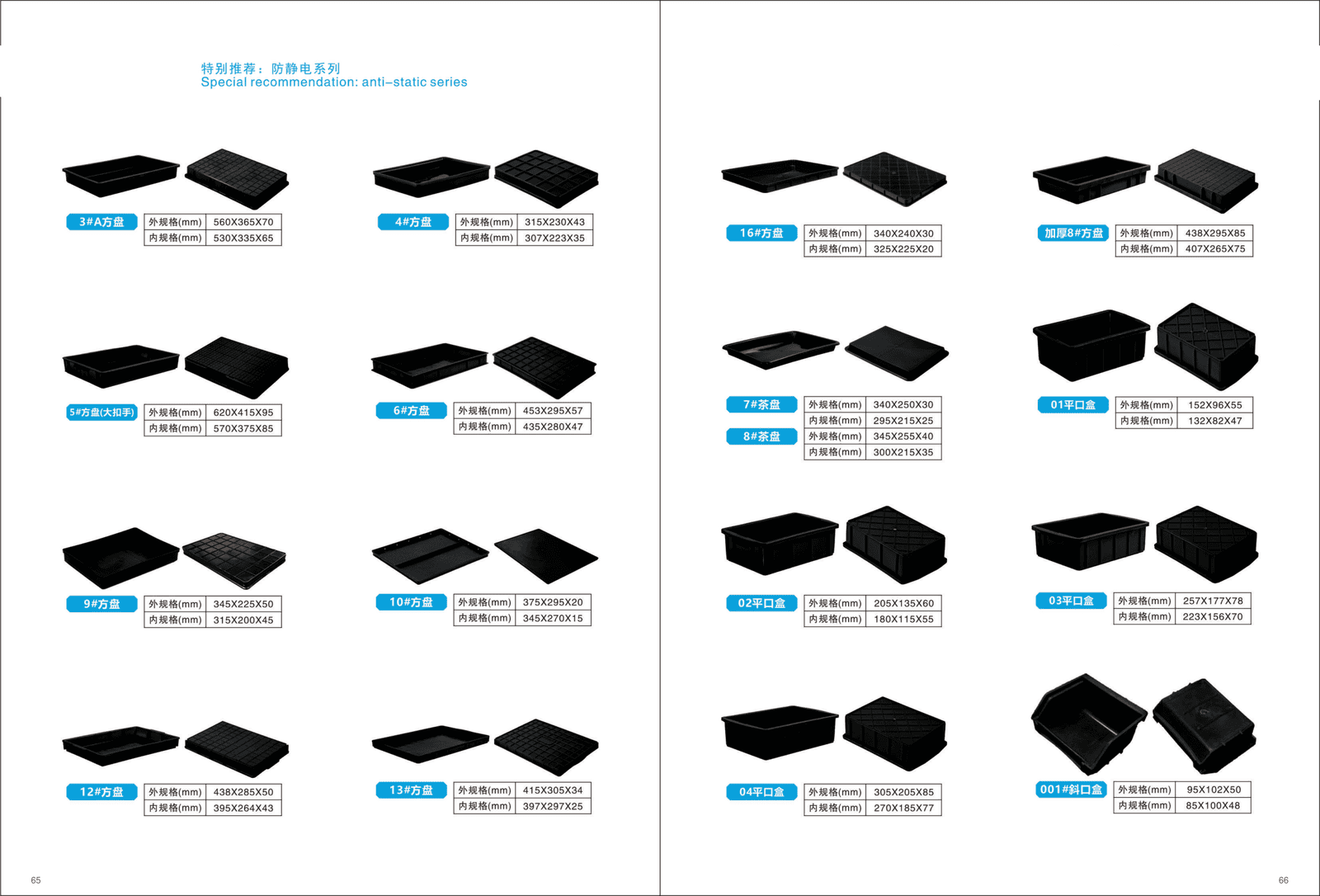
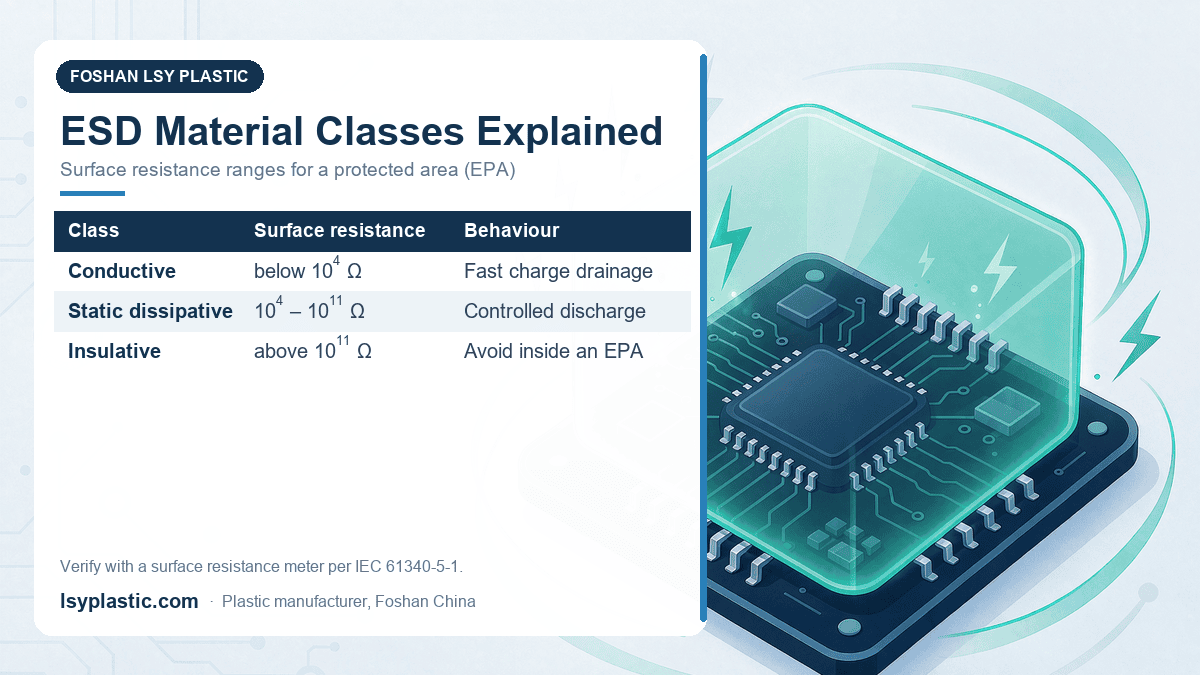
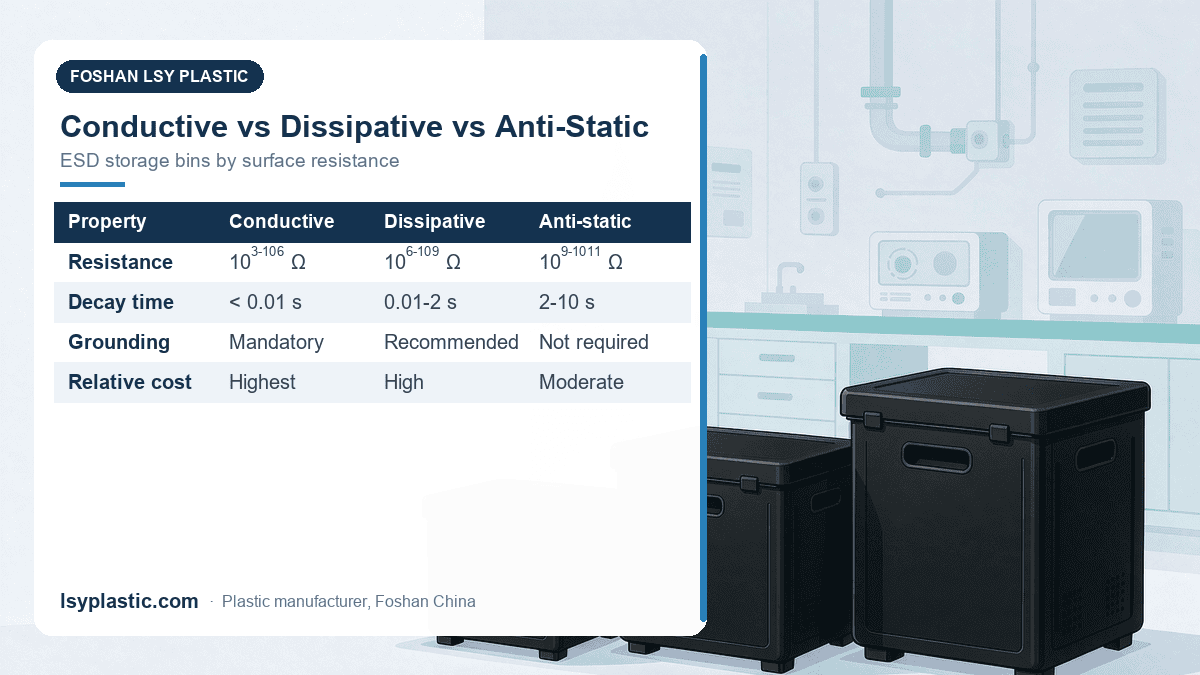
- Material class. Is the container static dissipative, with a measured surface resistance in the dissipative range? For dissipative containers the acceptable range is 10⁸-10¹¹ ohms tested per ANSI/ESD STM11.11. LSY Plastic manufactures ESD containers and pallets in a dissipative compound at 10⁶-10⁹ ohms surface resistance — comfortably inside the window.
- Grounding path. Can the item be bonded? Dissipative containers placed on grounded benches or ESD pallets on grounded floors discharge slowly and safely — that is the entire point of the resistance range. An ungrounded pile of dissipative boxes is still better than insulative ones, but the auditor wants the path documented.
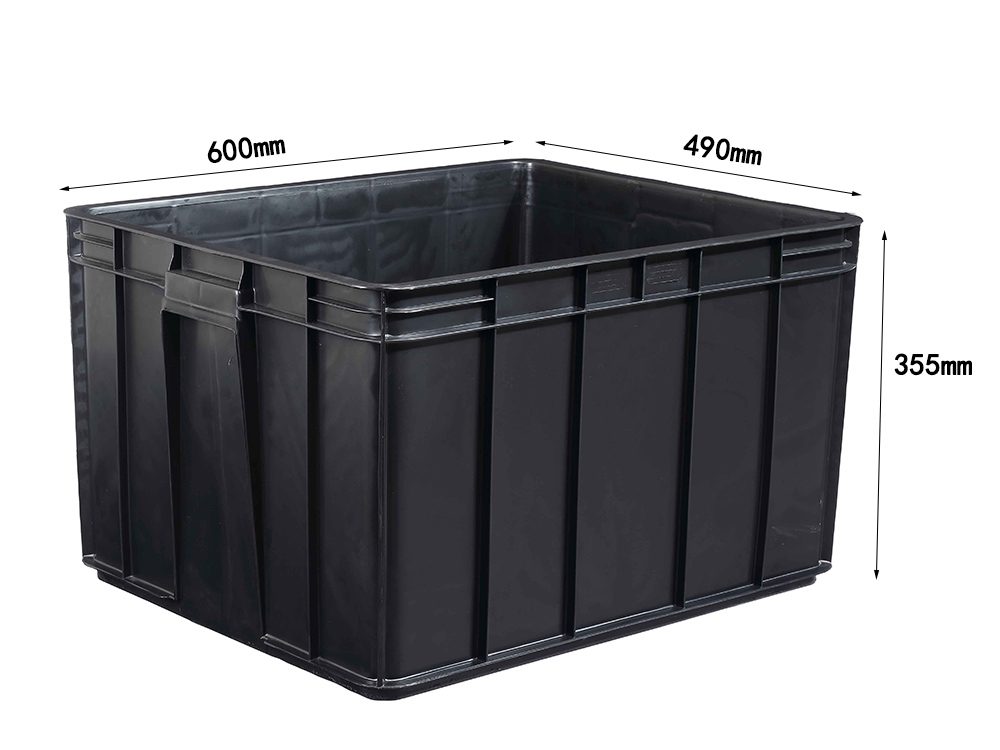
- Zone discipline. Are regular plastic totes physically kept out of the EPA? The cheapest fix is color: black ESD containers in, ordinary colored bins out, and a marked boundary.
Conductive vs Dissipative vs Insulative: Which Goes Where
Inside the EPA, static dissipative (roughly 10⁶ to 10⁹ ohms) is the default for WIP totes, trays and pallets — it discharges charge slowly enough that a charged board will not see a hard spark. Conductive items below 10⁴ ohms belong where controlled discharge is engineered in, such as fixed shelving and some pallet positions. Insulative plastics — ordinary HDPE and PP bins — belong outside the zone, full stop.
WIP Flow: How Containers Move Through the Zone
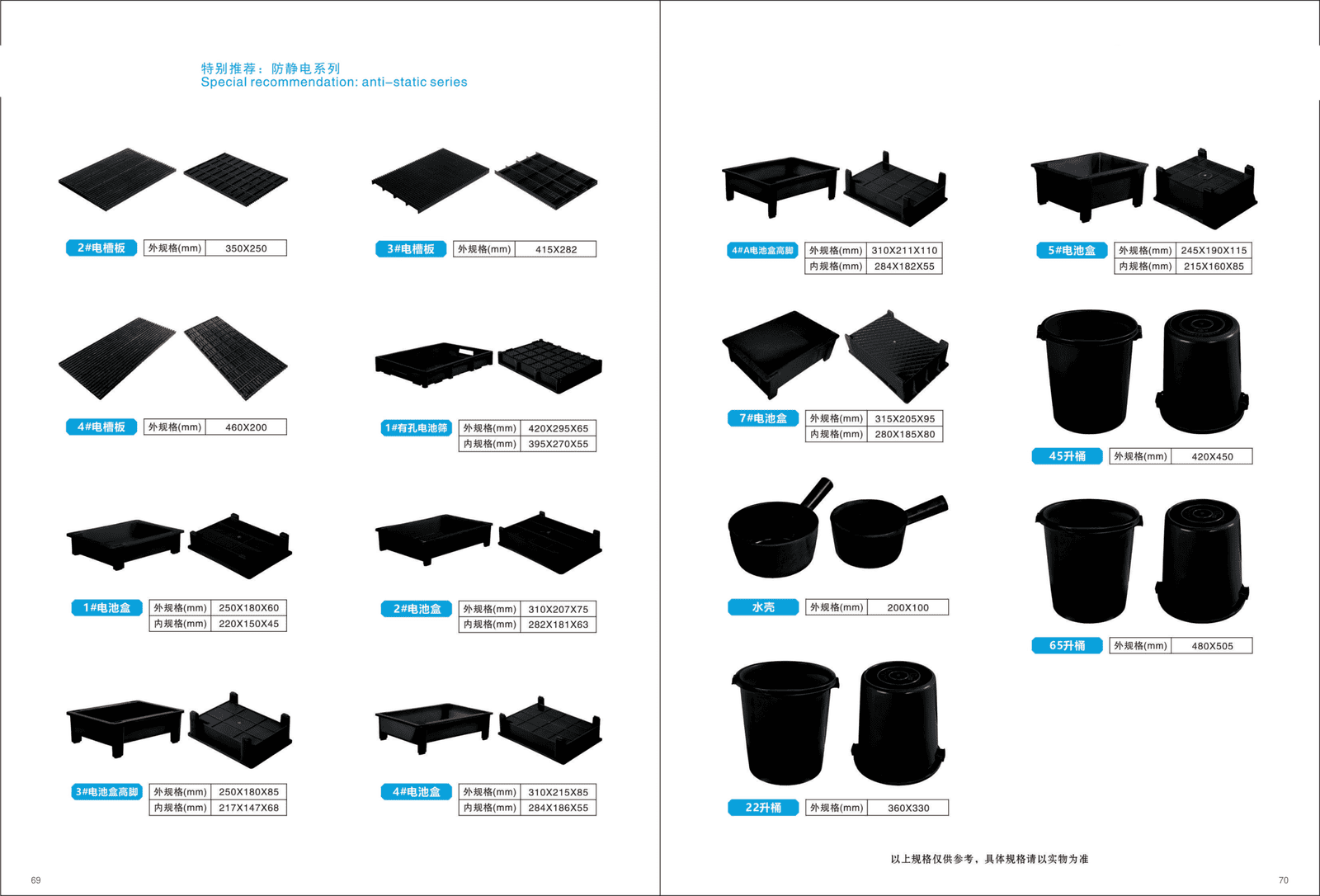
A practical EPA layout uses the same container family end to end: parts arrive in ESD trays or conductive bins, move between stations on ESD turnover boxes or trays, and ship out on ESD plastic pallets that keep the dissipative path intact down to the dock. Mixing a regular tote into that chain at any station is the most common minor finding we see buyers fixing in a rush before re-audit.
Supplier Verification Checklist (Before You Sign)
Whether you buy directly from an injection molding manufacturer or through a trader, ask for:
- Test reports per ANSI/ESD STM11.11 for the exact compound — not a generic datasheet.
- Batch consistency: surface resistance verified per production lot, since regrind and colorant drift the value.
- Aging and humidity behavior: dissipative performance after wash cycles and in tropical storage conditions, where carbon-loaded compounds can drift.
- Grounding-compatible form factor — no all-rubber feet or paint that isolates the box from the bench.
Working With LSY Plastic
FOSHAN LSY PLASTIC manufactures a full ESD line — pallets, turnover boxes, trays, parts boxes and battery carriers — in dissipative compounds from an injection molding plant with 35+ years of history, running 180T to 2500T JSW, Mitsubishi and NSC machines. Full ESD container families are covered in the ESD containers hub; SMT line-specific guidance is in our electronics pallet selection guide.
FAQ
Can I upgrade ordinary plastic bins to ESD with spray coating?
Topical anti-static sprays wear off with handling and washing, and auditors routinely flag them. Molded-in dissipative compound is the durable, audit-safe route.
Do ESD containers need to be black?
Carbon-loaded compounds are conventionally black, which also makes zone discipline visual — but the requirement is the measured resistance range, not the color.
How often should surface resistance be re-verified?
Most S20.20 programs verify on a set schedule and after any washing process change — follow your compliance plan’s verification interval for process-essential insulators and dissipative items.
Can I get samples before a full order?
Yes — samples are provided at cost price. Domestic China orders ship by courier with no MOQ; overseas orders ship as full container loads (FCL).
Do you supply test documentation for audits?
Yes, STM11.11-based surface resistance documentation is available for the ESD compound used in your production run.
Sourcing ESD containers and pallets? See our ESD & Anti-Static Industrial line for the sizes and materials discussed above.



