
Banquet catering is logistics wearing a bow tie. Behind every smooth event is a fleet of crates moving plates, glasses, cutlery and food between kitchens, service corridors and venues — and the crate fleet is what decides whether breakdown takes 40 minutes or two hours. This guide covers the crate types, capacity maths for event volumes, stacking workflow and wash compatibility. For glass rack sizing details, see our commercial glass rack and cup tray sizing guide.
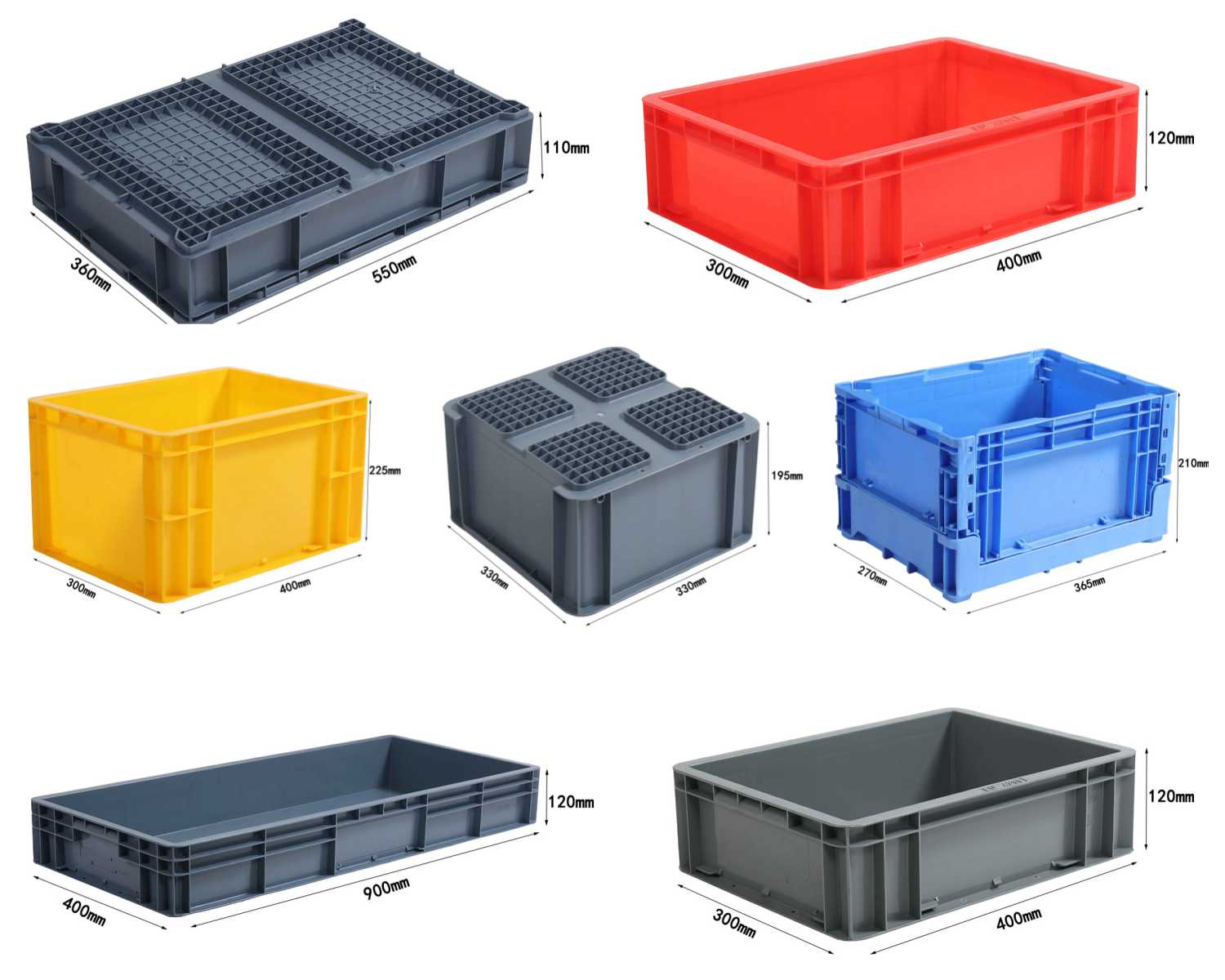
Four crate jobs, four crate types
| Type | Carries | Key features | Typical footprint |
|---|---|---|---|
| Plate crates | Dinner plates, chargers, bowls | Vertical dividers, flat base, stack rim | 600×400 or 400×300 mm |
| Glass racks | Stemware, tumblers, cups | Honeycomb or vertical compartments | 600×400 mm standard |
| Cutlery and smallware crates | Cutlery, linen, condiments | Shallow, removable inserts, lids | 400×300 mm |
| Food transport crates | GN trays, plated batches, bulk food | Deep, reinforced rims, tight-stacking, insulated options | 600×400 mm deep formats |
Standardising all four on one footprint family (Euro 600×400 / 400×300) is the quiet efficiency win: crates stack crosswise on one trolley, fit standard dollies, and pack tightly into vans.
Plate crates: the dividers do the work
Plate breakage in transport comes from plates touching each other, not from drops. Divider design rules:
- Slot width = plate diameter + 15 to 20 mm. Tighter rubs rims; looser lets plates tilt and clash.
- Divider height ≈ 60 to 75% of plate diameter. Full-height dividers waste space; too-short dividers let plates lean out.
- Base must be flat and smooth. Ribbed bases trap debris in the wash and scratch plate glazes.
Capacity check: a 600×400 crate with dividers holds 16 to 20 dinner plates, or 10 to 12 chargers. Weigh a full crate of banquet porcelain before standardising — 20 plates plus the crate can top 18 kg.
Glassware: support the shoulder, never the rim
Glasses fail at the rim and the stem. A correct rack supports each glass at its widest point:
- Honeycomb racks for tumblers and short stemware — every cell supports a glass on all four sides.
- Full-height compartment racks for tall stemware — the glass hangs by its shoulder, rim clear of the compartment top.
- Open-bottom racks for wash-through, then into padded transport crates for road moves.
Full sizing tables and compartment counts are in our glass rack sizing guide. For catering specifically: if you transport on real roads rather than smooth corridors, add a lid strap or shrink wrap — honeycomb alone does not survive a speed bump.
Event volume maths
Size the fleet from the largest regular event, not the average one:
- Settings = guests × courses of plated ware in circulation. A 300-guest banquet with three courses needs 300 sets in play plus ~10% re-issue buffer.
- Plate crates = settings ÷ 18 (average), so ≈ 19 crates → round to 21 with buffer.
- Glass racks = glasses ÷ rack capacity (20 for tumblers, 25 for cups); a 300-guest event with two glasses per head runs 30+ racks across the night in rotation.
- Food transport crates = GN tray count ÷ 2 per crate for double-stack, plus cold and hot separation.
- Dirty return — the return leg carries the same volume dirty, often all at once during breakdown. If the fleet only covers the clean outbound, breakdown stacks dirty crates on the floor.
Add 15 to 20% across the board for rotation: crates in the wash, crates in transit, crates staged for the next event while the current fleet is still dirty.
Stacking and trolley workflow
Banquet corridors reward tight stacking:
- Stack-through crates (open sides, interlocking rims) let attendants see contents and grab mid-stack without unstacking.
- Closed-wall crates with lids for food and anything wet; lids turn a stack into stable columns on the trolley.
- Match trolley deck to footprint — a 600×400 trolley deck carries two columns of Euro crates with zero overhang; see our platform trolley deck sizing guide.
- Label by course or table block — a lid label or colour band per table cluster saves the front-of-house team minutes per stack.
Wash compatibility
Service crates live between the dish pit and the van:
- Confirm the crate’s rated wash temperature covers your tunnel (most food-grade HDPE/PP handles 80–90°C).
- Smooth bases and open divider corners wash cleaner than heavily ribbed designs.
- Run raw-food transport crates on a separate wash cycle from plate crates — this is a HACCP point, not a preference. Our food-grade bins and HACCP guide covers the colour-separation logic.
- Inspect divider tops each wash — a chipped divider edge is a plate scratcher for the rest of its life.
Procurement checklist
- Standardise the fleet on one footprint family (Euro 600×400 / 400×300).
- Size divider slots to your actual plate and charger diameters.
- Match glass racks to glass types; support shoulders, not rims.
- Calculate fleet from your largest recurring event plus 20% rotation buffer.
- Verify wash temperature rating and smooth-base design.
- Plan the dirty return leg — lids and colour bands beat goodwill.
- Buy from a moulder who can adjust divider geometry to your ware, not a trader with fixed catalogue tooling.
Service crates from an injection moulding factory
LSY Plastic moulds Euro-standard service crates, glass racks, cup trays and platform trolleys in Foshan on Japanese-imported machines from 180T to 2500T with an in-house mould workshop — so divider spacing, compartment counts and stacking rims can be matched to your ware and van dimensions. We supply hotel, catering and distribution clients worldwide, alongside OEM customers including BYD, OPPO, vivo and Delice.
Get a catering crate fleet proposal
Tell us your typical event sizes, plate and glass specifications, and transport setup. We will propose crate types, counts, divider geometry and trolley matching.
WhatsApp: +86 19311059570
Email: fstyx01@lsyplastic.com
Related reading: commercial glass rack and cup tray sizing, plastic crates for bakery distribution, and Euro container sizes guide.