Electrostatic discharge (ESD) costs the electronics industry billions of dollars annually in damaged components, reduced yields, and warranty claims. ESD container material guides are the first line of defense in protecting sensitive electronic parts during manufacturing, transport, and storage. This guide explains ESD container materials, specifications, and selection criteria for electronics manufacturers.
What Are ESD Containers?
ESD containers are specially designed plastic containers that prevent electrostatic discharge from damaging sensitive electronic components. They are manufactured from carbon-loaded or conductive-coated polymers that dissipate static charges before they can reach sensitive parts. Browse our ESD product range.
ESD Container Material Types
1. Conductive (Carbon-Loaded) PP
Carbon-loaded polypropylene is the most common ESD container material. Carbon black is mixed into the PP resin during molding, creating a permanently conductive material with surface resistance of 10^3 to 10^6 ohms. Key advantages:
- Permanent conductivity (does not wear off)
- Durable and impact-resistant
- Cost-effective for high-volume use
- Available in standard black color
- Temperature resistant up to 120C
2. Dissipative PP
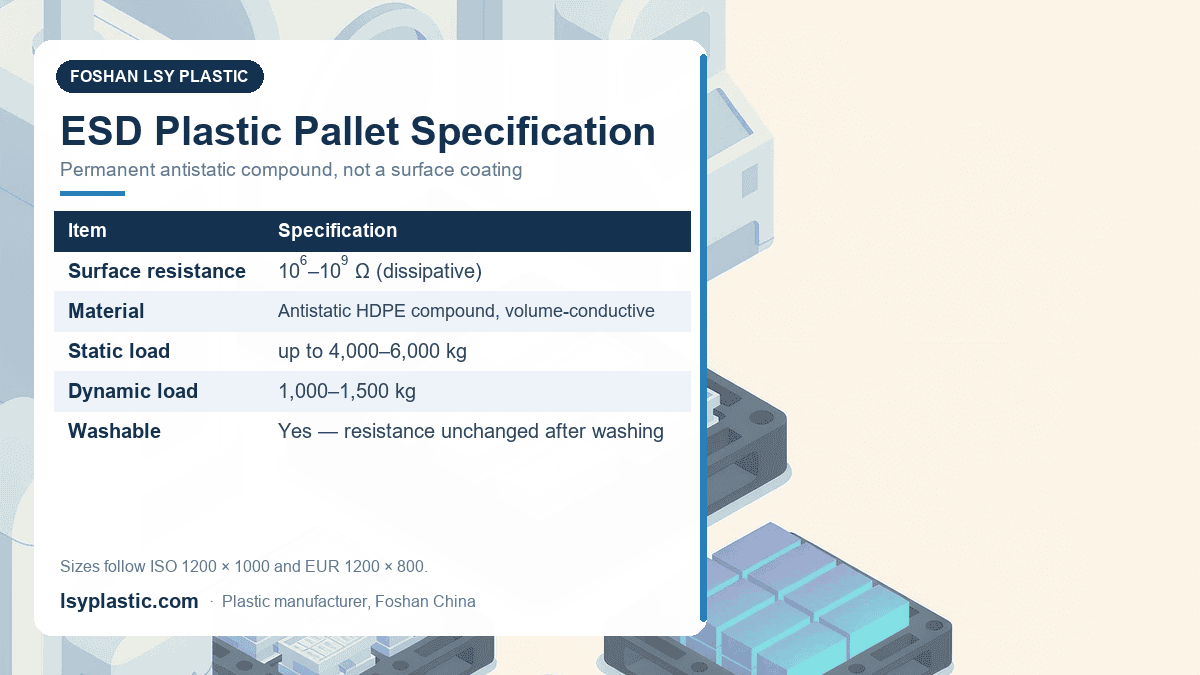
Dissipative materials have a higher surface resistance (10^6 to 10^9 ohms) that allows controlled dissipation of static charges. This slower discharge rate is preferred for highly sensitive components that could be damaged by rapid discharge.
3. Anti-Static Coated Containers
These containers have a surface coating that provides temporary anti-static properties. While less expensive initially, the coating wears off over time and requires periodic reapplication or replacement. Not recommended for critical ESD-sensitive applications.
ESD Performance Standards
| Standard | Scope | Resistance Range |
|---|---|---|
| ANSI/ESD S20.20 | ESD control program | 10^6 to 10^9 ohms |
| IEC 61340-5-1 | International ESD standard | 10^6 to 10^9 ohms |
| MIL-STD-1686 | Military applications | 10^3 to 10^9 ohms |
| JESD625-B | JEDEC (semiconductor) | 10^3 to 10^9 ohms |
Types of ESD Containers
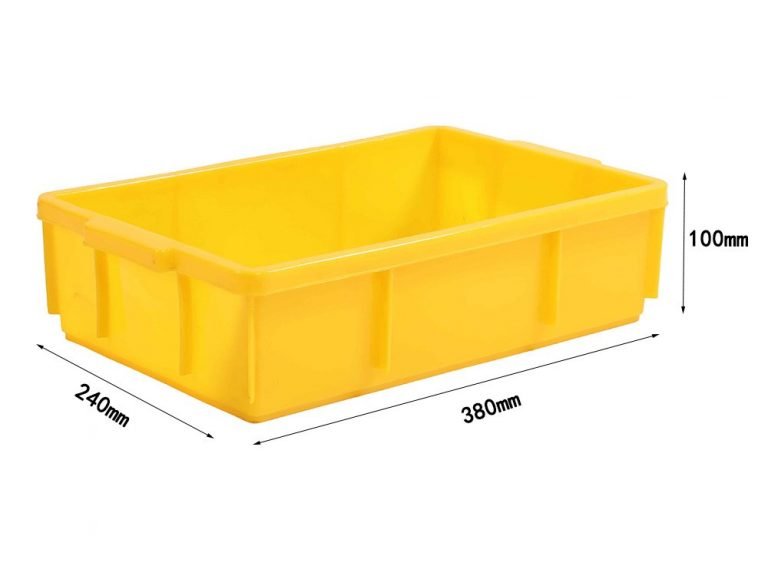
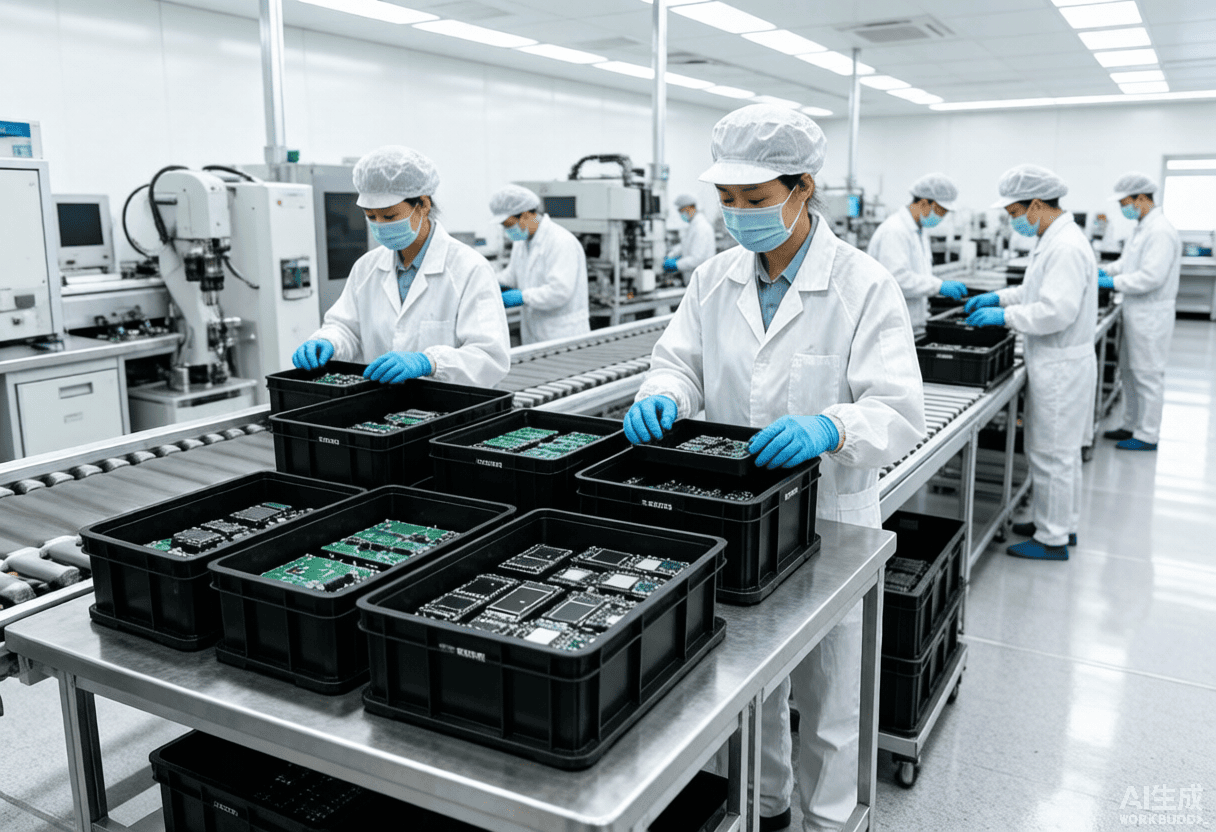
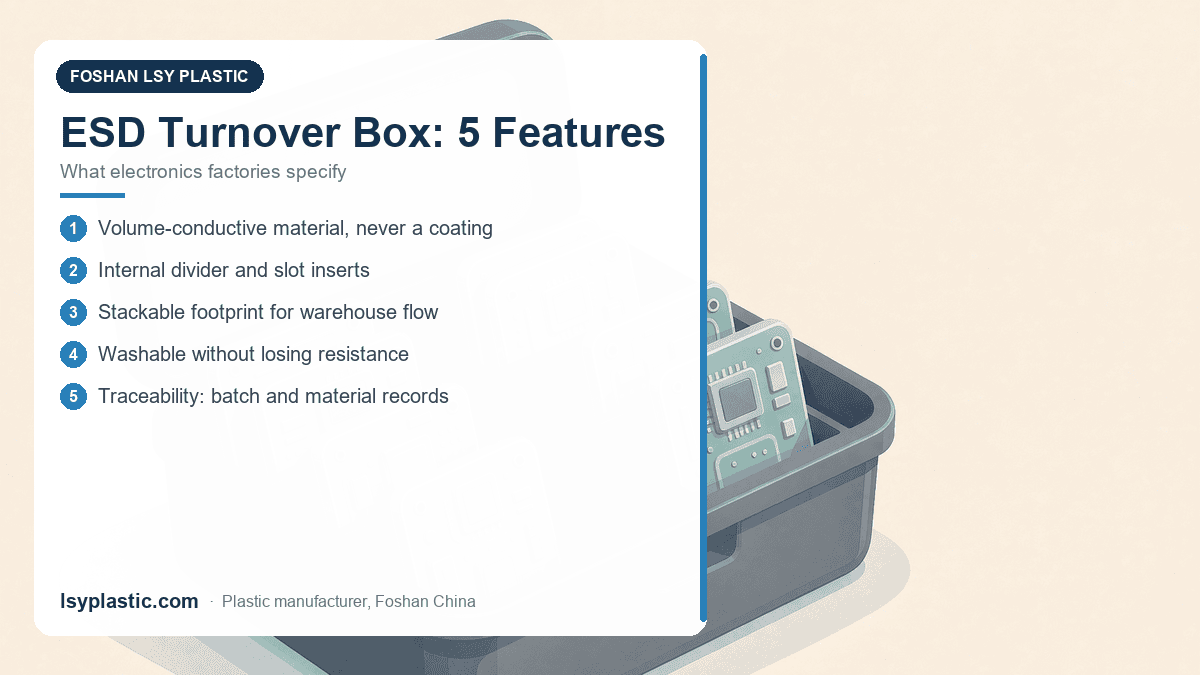
- ESD turnover boxes – Open-top containers for component handling during assembly
- ESD parts bins – Sloped-front bins for easy access to small components
- ESD trays – Flat trays for IC, PCB, and wafer transport
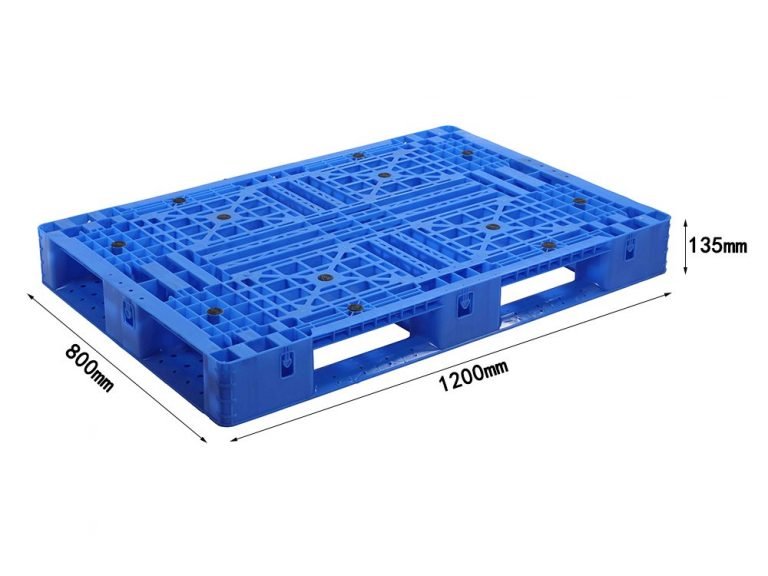
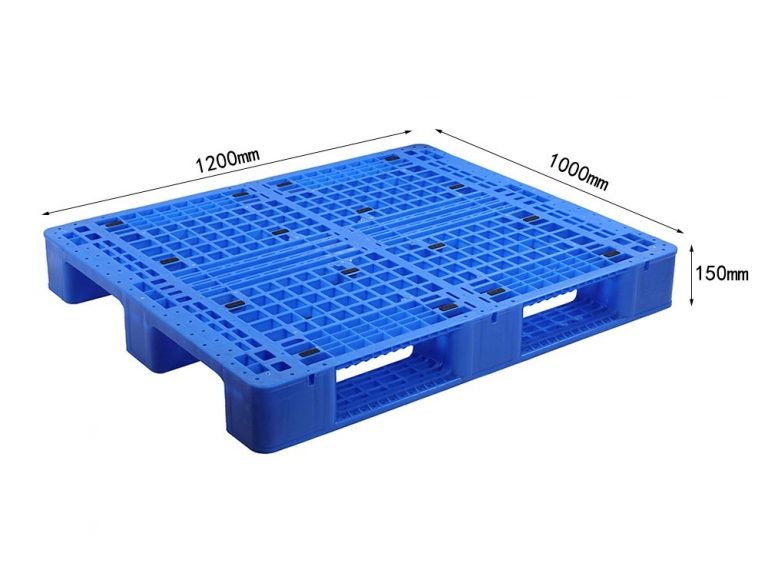
- ESD pallets – For bulk transport of packaged electronics
- ESD divider boxes – Compartmentalized containers for organized storage
Selecting the Right ESD Container
- Identify component sensitivity – Determine ESD sensitivity class (HBM rating)
- Select resistance range – Match container resistance to component requirements
- Choose container type – Based on component size and handling workflow
- Consider automation compatibility – Dimensions for pick-and-place, AGV
- Verify certification – Request test reports and compliance documentation
- Plan cleaning protocol – ESD containers require special cleaning to maintain conductivity
Why Choose LSY Plastic ESD Containers?
- 35+ years manufacturing experience – Serving electronics industry leaders
- OEM supplier to OPPO and vivo – Proven ESD protection for smartphone manufacturing
- Japanese injection molding process guide – Consistent conductivity throughout container
- Full ESD product range – Boxes, bins, trays, pallets, dividers
- Custom solutions available – Tailored to your specific components
- Compliance documentation – Surface resistance test reports provided
As a supplier to OPPO and vivo for ESD containers, we understand the stringent requirements of electronics manufacturing. Learn about our OEM capabilities or contact us for ESD container quotes.
Matching the Material to the Production Area
Resistance range is a specification; the production area is the decision. Use this mapping when building a container program across a facility:
| Production area | Recommended material | Resistance range | Why |
|---|---|---|---|
| PCB assembly & SMT lines | Dissipative PP | 106–109 ohms | Controlled, slower discharge protects sensitive boards from rapid-discharge events |
| Component warehouse & transport | Conductive carbon-loaded PP | 103–106 ohms | Rapid dissipation and impact resistance for high-volume handling |
| Cleanroom and sensitive lines | Conductive carbon-loaded PP | 103–106 ohms | Permanent conductivity, temperature resistant to 120°C, no coating to shed particles |
| General packaging (non-critical) | Anti-static coated | 1010–1012 ohms | Lowest upfront cost where ESD risk is low and replacement is acceptable |
Verification checklist for every incoming lot
- Surface resistance test report against IEC 61340-5-1 or ANSI/ESD S20.20, issued for the delivered lot — not a generic factory brochure
- Even black coloration throughout the container — consistent carbon dispersion is what makes conductivity uniform across the walls
- Sample-based incoming test with a calibrated megohmmeter before the lot enters service
- Material certification (PP or PE with carbon/polymer additive) on file for traceability
Related ESD guides: ESD storage containers and bins · ESD safe storage containers
Sourcing These Products? Buy Direct from the Factory
LSY Plastic has been an injection moulding manufacturer in Foshan, China for over 35 years. We supply hotels, restaurants and warehouses worldwide at factory-direct prices, shipped by full container load (FCL).
Buying in volume? For the same quantity, we commit to the best price on the market.
Frequently Asked Questions
How long do ESD containers maintain their conductivity?
Carbon-loaded PP containers maintain conductivity for their entire 5-8 year lifespan. The conductive property is built into the material, not applied as a coating, so it does not wear off with use or cleaning.
Can ESD containers be cleaned without losing conductivity?
Yes, carbon-loaded PP ESD containers can be cleaned with standard ESD-safe cleaners. Avoid abrasive scrubbing that could remove surface material. Periodic resistance testing is recommended to verify continued performance.
Conclusion
ESD containers are a critical investment for any electronics manufacturer. Choosing the right material, type, and supplier protects your components, improves yields, and reduces warranty claims. Contact LSY Plastic for ESD container solutions backed by 35+ years of manufacturing expertise.
Learn more: Visit our complete ESD Containers Hub for in-depth guides and product recommendations.
Related guides:
epa setup esd s20 20 audit container checklist
esd container testing maintenance
attached lid container sizes security returns