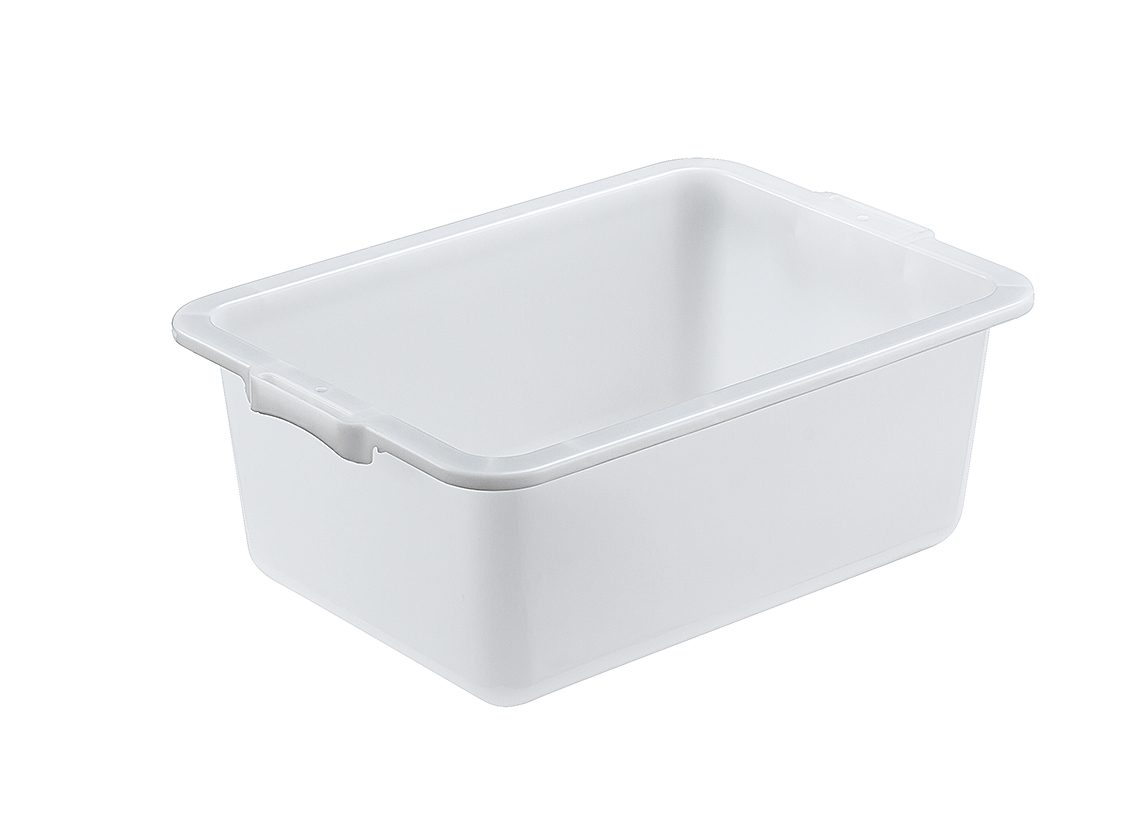
The food basin is the most touched tool in a commercial kitchen and the least specified item on most purchase orders. Buy thin ones and they crack at the rim within a season; buy the wrong resin and you have a compliance problem; buy the wrong sizes and your prep line stacks half-empty basins three deep. Here is what to specify.
For the full range of food-safe storage options, see our plastic food storage containers guide.
Size by task, not by habit
| Capacity | Primary tasks | Notes |
|---|---|---|
| 10-20 L | Marinades, sauces, small-batch prep | Light enough to carry one-handed when full |
| 20-40 L | Vegetable washing, batch mixing, brining | The workhorse tier — order the most here |
| 40 L+ | Soaking, proofing, chill-bath staging | Needs reinforced rim handles for two-person lift |
Standardizing on two or three sizes from the same series lets empties nest in one column — mixed-brand fleets never nest cleanly and waste half a shelf.
Material: two resins, one decision
Food basins are moulded in HDPE or PP. The practical differences:
- HDPE — better impact resistance, excellent at freezer temperatures, forgiving with rough handling. Choose it when basins move between cold storage and prep.
- PP — stiffer walls, better with repeated hot-fill and dishwasher cycles, slightly better scooping feel. Choose it for hot-line batch work.
Either way, demand food-contact certification for the specific resin lot — FDA or EU 10/2011 depending on your market. The compliance paperwork behind food-contact plastics is covered in detail in our food-grade certification guide; the short version is: no certificate, no food.
Construction details that decide lifespan
- Rim reinforcement — a rolled or thickened rim is where thin basins crack first; check it flexes without whitening
- Moulded-in handles — glued or welded fittings fail hygiene audits
- Uniform wall thickness — sink marks and thin corners come from poor tooling; they crack under thermal cycling (the same wall-and-rib logic we explain in the moulding cost guide)
- Smooth interior, no crevices — every seam is a cleaning failure waiting for an auditor
Colour coding under HACCP
If your kitchen runs a HACCP or similar food safety plan, colour separation is the cheapest control you can buy:
| Colour | Assigned use |
|---|---|
| Red | Raw meat |
| Blue | Raw seafood |
| Green | Fruit & vegetables |
| White | Ready-to-eat / bakery |
The colour must be moulded in, not painted or labelled — colour survives the dishwasher, stickers do not. The logic parallels the colour-coded crate systems used in food processing, which we cover in the crate colour-coding guide.
Buying checklist
- Two or three nesting sizes, one series, one supplier
- HDPE for freezer duty, PP for hot-line duty
- Food-contact certificate for the resin lot, on file
- Reinforced rim + moulded handles only
- All HACCP colours in the same model so they stay interchangeable
- Order 10-15% spares — basins are consumables at fleet scale
LSY Plastic moulds the 8312/8313/8316/8318 food basin series in food-grade material, available in HACCP colours, exported by full container. For a size list and certification documents, contact us: WhatsApp +86 19311059570, email fstyx01@lsyplastic.com.