A sink mark is a shallow depression on the surface of a moulded part, caused by the material shrinking as it cools where the section is thicker than its surroundings. It is the most common cosmetic defect in injection moulding and the one buyers complain about most – because on a flat panel it catches the light and looks like a dent.
Where sink marks appear and why
Sink happens where the wall is locally thicker, so that area cools and freezes later than the skin around it. As the core finally solidifies it pulls volume, and the already-solid skin has no choice but to cave in.
| Location | Typical cause | Fix priority |
|---|---|---|
| Opposite a rib or boss | Rib too thick relative to wall | Design: thin the rib |
| Centre of a thick pad | Section much thicker than nominal | Design: core out the pad |
| Opposite a screw boss | Boss wall too thick | Design: reduce boss OD |
| Near the gate | Gate froze before holding finished | Process: longer hold / bigger gate |
| General, across the panel | Insufficient holding pressure | Process: raise hold pressure and time |
| Only in humid months | Moisture in hygroscopic resin | Process: dry the material |
The design rule that prevents most of it
Rib thickness should be 50-60% of the nominal wall. On a 3 mm wall, ribs should be 1.5-1.8 mm, not 3 mm. A rib as thick as the wall guarantees a sink mark opposite it, because there is simply more material to shrink in that line than in the wall next to it.
The same applies to bosses: keep the boss wall at 60% of nominal and add gussets rather than thickening the boss.
If you cannot thin the rib because the part needs the stiffness, the alternative is to accept a shallow sink and agree a limit, or to move the rib behind a texture – a textured surface hides sink up to about 0.05 mm very effectively.
Process fixes, in order
1. Extend holding time until the gate freezes
Holding pressure is what pushes extra material in to compensate for shrinkage. If hold stops before the gate solidifies, material flows back out and you get sink. Find the gate freeze time by weighing parts: increase hold time in 1 second steps, weigh each part, and stop where weight no longer increases. That is your gate seal time. Typical values: 1.5-3 s for a 2 mm wall, 4-8 s for a 4 mm wall.
2. Raise holding pressure – but watch the flash
Standard starting point is 50-70% of injection pressure. Raise in 5% steps. If you start seeing flash at the parting line before the sink clears, the problem is the section design, not the pressure.
3. Enlarge or move the gate
A gate that is too small freezes early and cuts off holding. For a 3 mm wall PP part, a 0.8-1.2 mm edge gate is typical; going to 1.5 mm often clears stubborn sink. If the sink is far from the gate, a second gate may be cheaper than fighting it with pressure.
4. Lower melt temperature
Hotter melt shrinks more. Dropping 10-15 C reduces volumetric shrinkage measurably. Do not drop so far that you create weld lines or short shots.
5. Cool the thick area harder
If the sink is local, local cooling is the fix: a bubbler or a high-conductivity insert in the core under the thick section. This is a tooling change and worth it only for high volumes.
How deep is acceptable
There is no universal standard, but the working limits used in production are:
- Cosmetic A surface (visible at arm’s length): 0.03 mm maximum, often specified as “no visible sink at 500 mm”
- Cosmetic B surface: 0.05-0.08 mm
- Non-cosmetic / internal: no limit, provided it does not affect fit
Measure it with a dial indicator or a depth gauge across the sink, not by eye. And agree the limit before tooling, because once the cavity is cut, removing sink usually means welding and re-machining.
Sink vs void
If the surface does not cave but the part is still heavy-section, the shrinkage may be forming an internal void instead. Voids are worse – they are invisible and they cut load-bearing area. A part with a suspected void can be checked by sectioning, or by ultrasound on critical parts.
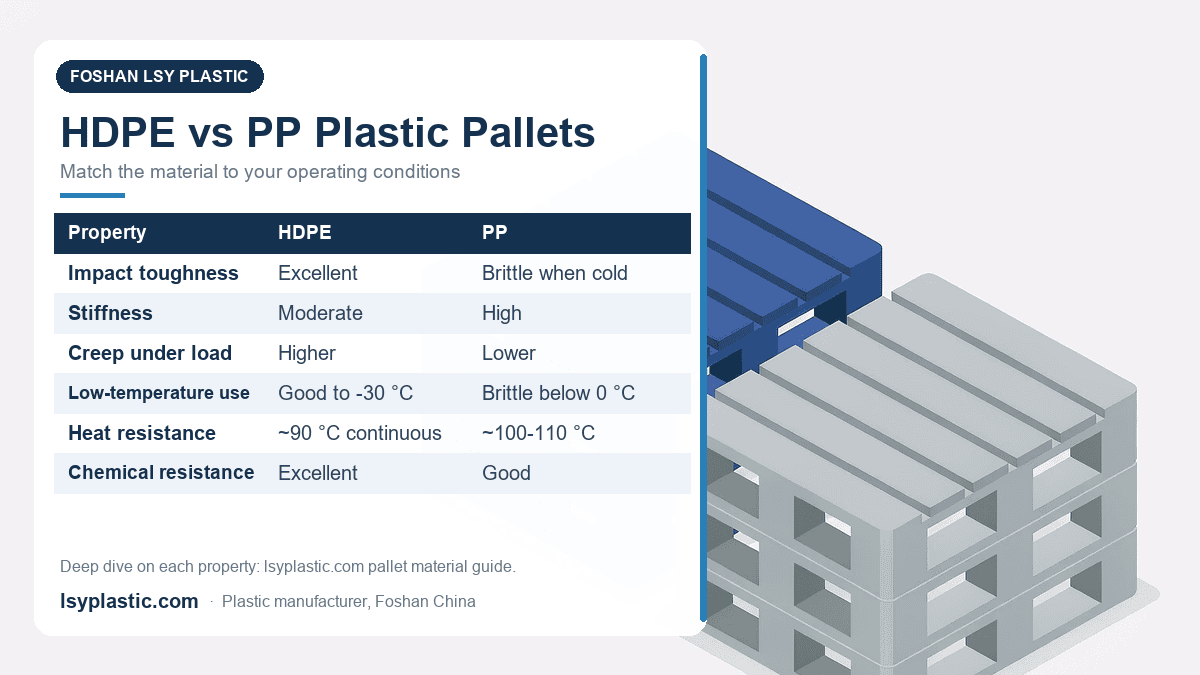
Related: injection moulding hub, cost per part calculator, HDPE vs PP comparison.
Related guide: knit lines and weld lines in injection molding.
Sink marks you cannot clear? Send a photo and the wall and rib dimensions and we will tell you whether it is a process or a design problem.