Saudi Arabia is the largest plastics market in the Gulf, and it is also the one with the
strictest import paperwork. If you are searching plastic pallet supplier saudi arabia,
waste bins manufacturers in saudi arabia or plastic crates manufacturers in
saudi arabia, the specification questions are straightforward — but the certification step is
where most first shipments get stuck. This page covers both.
Start with SABER: the step that stops shipments
Saudi Arabia runs the SABER platform (Saudi Product Safety Programme, administered through SASO).
Most regulated products cannot clear customs without it. The mechanism matters more than the label:
- PCoC — Product Certificate of Conformity. Issued against the product itself,
valid for one year, renewable. It is applied for by the importer or their Saudi agent, not usually by
the overseas factory. - SCoC — Shipment Certificate of Conformity. Issued per shipment, against the
specific commercial invoice and packing list. Without it, the consignment sits at port. - Our role is documentation supply. We provide the technical file that supports
your application: material specification, resin grade, dimensional drawings, load test data and, where
required, third-party test reports. We cannot issue the certificate for you — no overseas factory can
— but a complete file is usually the difference between a two-day approval and a three-week delay.
Practically: tell us your HS code and end use when you request a quote, and we will prepare the
document set alongside the proforma invoice rather than after it.
Heat is the real specification driver
Summer conditions across Riyadh, Dammam and Jeddah routinely exceed 45°C, and surface temperatures
on exposed yard storage and flatbed trailers go considerably higher. That has three consequences that
do not apply in Europe:
- Resin selection changes. HDPE holds impact strength far better at elevated
temperature than polypropylene. PP is stiffer and cheaper, which is fine in a climate-controlled
warehouse, but in an uncovered yard it is the wrong trade. For permanent outdoor use we recommend
HDPE with UV stabiliser. - UV stabiliser is not optional. Unstabilised polypropylene in Gulf sunlight can
lose a large share of its impact strength within a single season and becomes visibly chalky and
brittle. UV-stabilised masterbatch is a small line-item cost and a large difference in service life.
If your bins sit on a kerbside or in an open yard, specify it. - Colour choice interacts with heat. Dark colours absorb more radiant heat. For
outdoor waste bins in direct sun, a lighter body colour keeps the contents cooler and slows odour
build-up — a practical point that matters more in Jeddah than in Manchester.
If you want the underlying material comparison, we have published the full breakdown in our
HDPE versus
polypropylene pallet comparison.
Sizing: what actually moves in the Kingdom
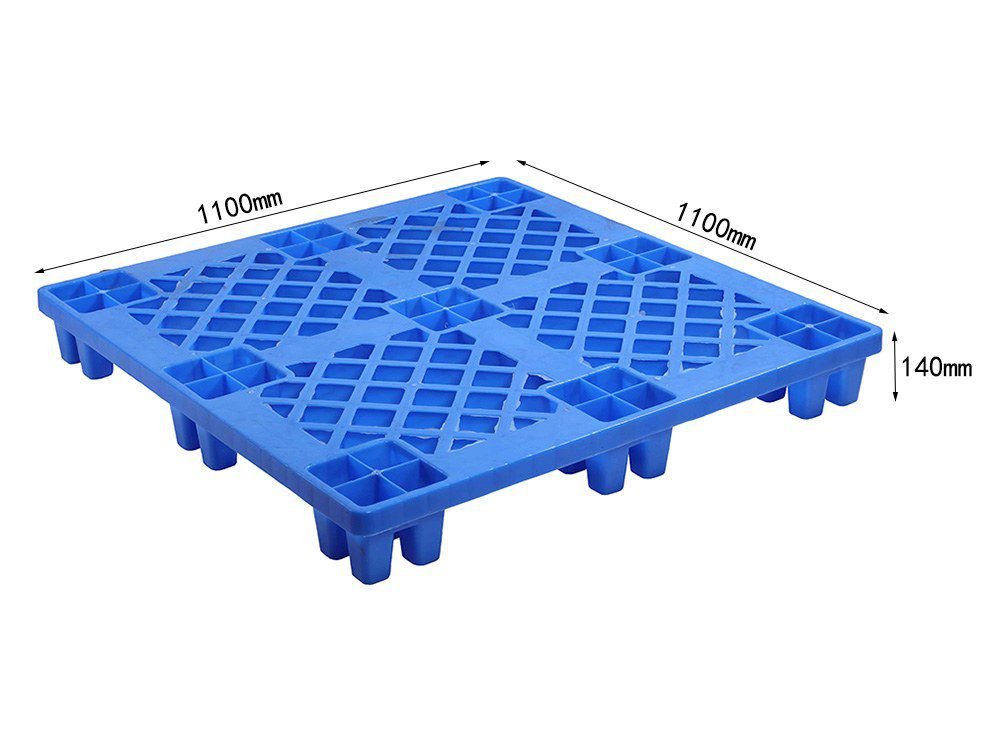
The Gulf standard footprint is 1200 x 1000 mm, and it is the safe default for Saudi warehousing.
The main exceptions:
- 1200 x 800 mm where racking or European-origin handling equipment dictates it.
- 1140 x 1140 mm appears in some legacy food and beverage distribution systems
inherited from Australian and UK setups. - Confirm the loaded stack rating, not just the static figure. A pallet rated
4000 kg static may only be rated around 1000 kg in racking. The difference is the support condition,
not the material. Our
load
capacity guide sets out how to read the three ratings.
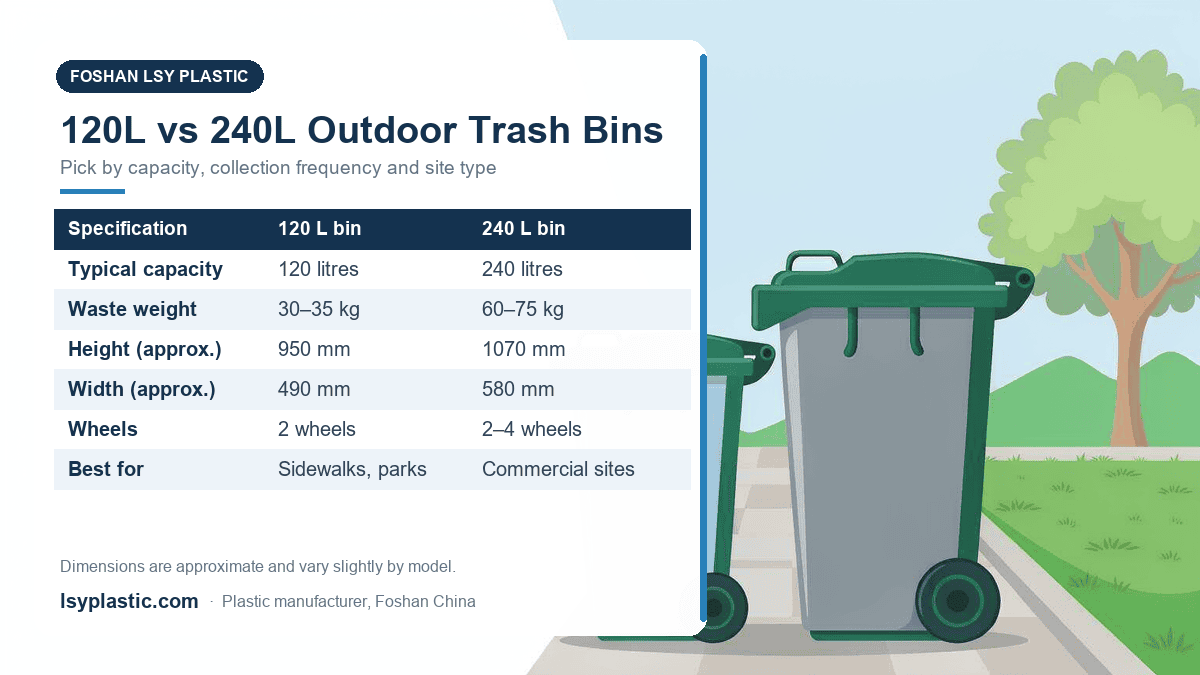
Waste bins follow the municipal standard sizes: 120L and 240L dominate kerbside and facility
collection, with smaller pedal bins for guest rooms and washrooms. The full selection logic is in our
Middle
East pallet sizing guide.
Pricing and shipment terms
Three things determine your landed cost, and only one of them is the unit price:
- Container utilisation. Nestable crates and pallets change the economics
completely — a 40HQ may hold several times more nested units than assembled ones. We quote loading
quantities per SKU for exactly this reason. - FCL only. Overseas orders ship full container load. We do not run LCL or parcel
shipments, which keeps handling damage low and unit freight predictable. - Samples at cost. Samples are charged at cost price, not free. Their value is in
verifying load rating and fit before you commit to a container.
Lead time for repeat SKUs is typically 15 to 25 days after deposit, confirmed in writing on each
proforma invoice. If you are supplying a Vision 2030 project with a fixed site date, tell us the
date at quote stage so we can plan mould and machine capacity rather than react.
Products most often specified for Saudi projects
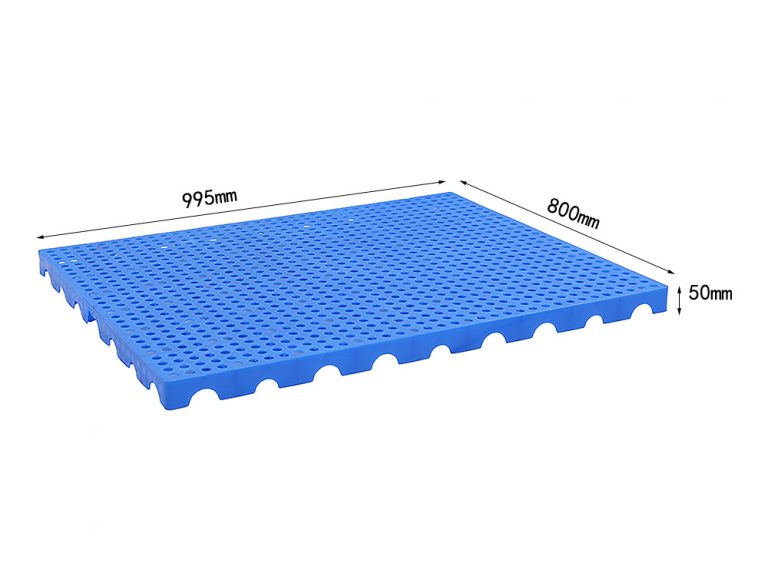
- Rackable 3-runner plastic pallets — the standard choice for
racked warehouse storage, 1200 x 1000 mm. - Single-sided fork-foot pallets — four-way entry, the general
purpose workhorse for distribution. - Double-sided pallets — reversible deck for heavy stacking and
long service life. - Square-foot style pallets — for light duty and one-way
export shipment. - 240L-class square waste bins — UV-stabilised HDPE for outdoor
and municipal collection. - Pedal-operated waste bins — hands-free operation for
healthcare, food service and washrooms. - Recycling and colour-coded bins — for multi-stream waste
separation programmes. - Ventilated stacking crates — produce and cold chain handling,
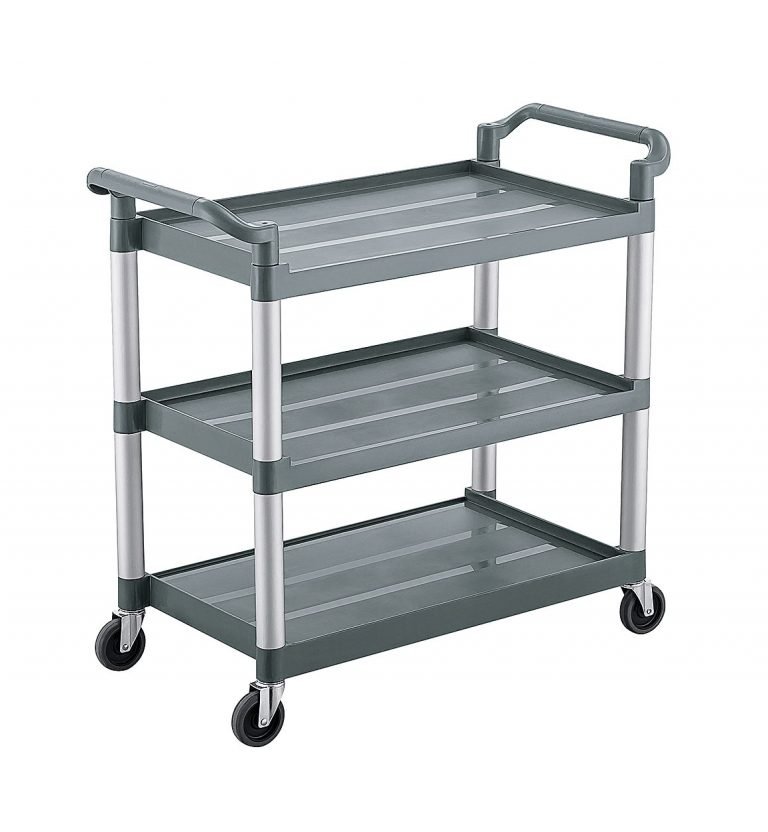
nests when empty. - Heavy-duty dish and service carts — square-tube steel frame
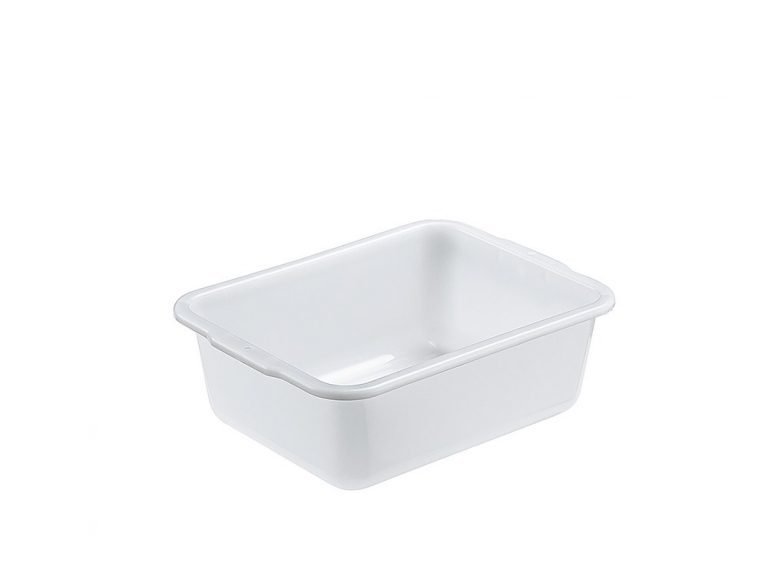
for hotel and banquet service. - Collection basins and bus boxes — food-grade, standard
footprints for commercial kitchens.
Related market guides
Buyers sourcing for Saudi Arabia usually compare neighbouring Gulf markets at the same time. See
our UAE and GCC buying
guide and the Qatar
supplier guide for specification differences across the region.
Request a quote
Send the SKU, quantity and destination port — Jeddah, Dammam, Riyadh dry port or Jubail — and we
will return FOB pricing with 40HQ loading quantities, the technical documentation set for your SABER
application, and confirmed lead time. WhatsApp +86 19311059570 or email fstyx01@lsyplastic.com.
Frequently Asked Questions (FAQ)
Q1: Do you supply the SABER certificate?
A: No overseas factory can issue it. SABER certification (PCoC for the product, SCoC per shipment) is applied for by you or your Saudi agent through the SABER platform. What we supply is the technical file that supports the application: material specification, resin grade, dimensional drawings, load test data and third-party test reports where required. We prepare it alongside the proforma invoice rather than after it, which is usually the difference between a two-day approval and a three-week delay. Tell us your HS code and end use at quote stage.
Q2: What pallet size is standard for Saudi Arabia?
A: 1200 x 1000 mm is the Gulf standard and the safe default. 1200 x 800 mm is used where racking or European-origin handling equipment dictates it, and 1140 x 1140 mm appears in some legacy food and beverage distribution systems. Always confirm the loaded racking rating rather than the static figure – a pallet rated 4000 kg static may only hold around 1000 kg in racking, because the difference is the support condition, not the material.
Q3: Can the pallets and bins handle 50C outdoor storage?
A: Yes, with the right resin. We recommend UV-stabilised HDPE rather than polypropylene for permanent outdoor use: HDPE holds impact strength far better at elevated temperature, while PP is stiffer but becomes brittle near freezing and degrades faster under Gulf sunlight. Unstabilised resin can lose a large share of its impact strength within one season and turns visibly chalky. Lighter body colours also stay cooler in direct sun and slow odour build-up.
Q4: What is the lead time to Jeddah or Dammam?
A: Production for repeat SKUs is typically 15 to 25 days after deposit, confirmed in writing on each proforma invoice. Transit to Jeddah is additional and depends on the service your forwarder books. If you are supplying a project with a fixed site date, tell us at quote stage so we can plan mould and machine capacity rather than react to it.
Q5: Do you charge for samples?
A: Yes. Samples are supplied at cost price, not free, and courier freight is on the buyer s account. Their value is verifying load rating, fit and resin quality before you commit to a container. The sample cost can be referenced against the first order for repeat SKUs.