
Plastic pallets typically cost USD 15–60 per unit for lightweight export and nesting designs, USD 40–120 for medium-duty rackable pallets, and USD 120–300+ for heavy-duty, steel-reinforced or custom-engineered models. These ranges reflect factory pricing at full container-load quantities, ex-works China. The single biggest price driver is not the brand or the country of manufacture — it is how many kilograms of plastic the pallet contains, and whether that plastic is virgin or recycled resin.
This guide breaks down every factor that moves a plastic pallet’s price, shows realistic price bands by pallet type, and explains how to judge quotes on total cost of ownership rather than sticker price. If you are comparing suppliers right now, the sections on material, structure and container loading will help you spot quotes that look cheap but cost more per trip.
What Determines the Price of a Plastic Pallet?
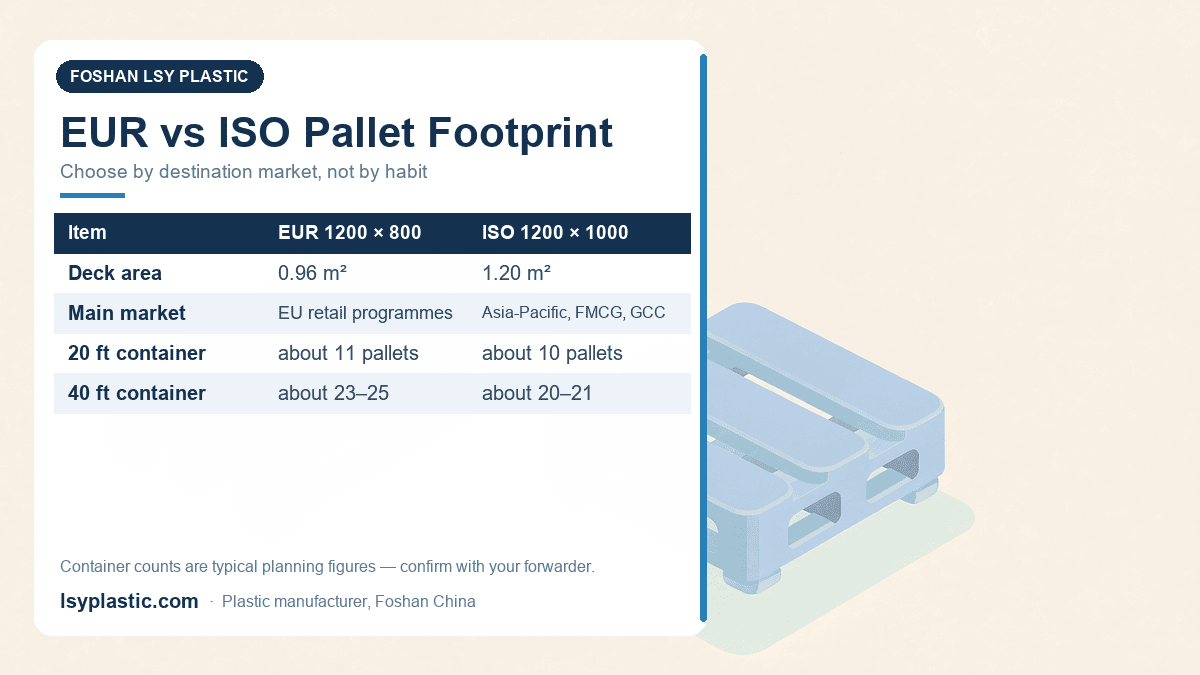
Two quotes for a “1200×1000 mm plastic pallet” can differ by 300%. Here is why, factor by factor.
1. Resin type: HDPE vs PP, virgin vs recycled
Nearly all pallets are molded from high-density polyethylene (HDPE) or polypropylene (PP). Virgin HDPE offers the best balance of impact toughness and cost; PP adds stiffness and heat resistance at a modest premium. Recycled resin — usually reprocessed HDPE from industrial scrap — can cut material cost by 15–35%, which is why single-use export pallets are almost always made from it. For closed-loop fleets that reuse pallets hundreds of times, virgin or blended material pays for itself through longer service life. A supplier who cannot tell you the resin blend percentage is not giving you a comparable quote.
2. Pallet weight: the number-one cost driver
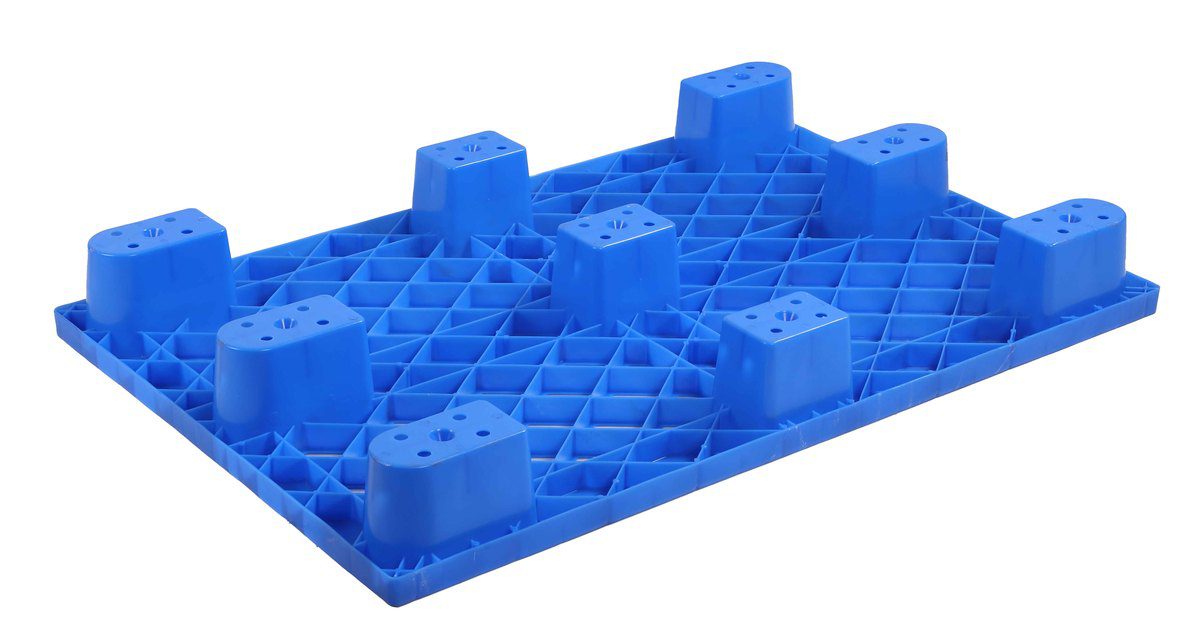
A plastic pallet is essentially a shaped block of polymer, so its price tracks its weight almost linearly. A light 1200×800 mm export pallet may weigh 7–9 kg, while a heavy-duty 1200×1000 mm rackable pallet can weigh 20–25 kg. At raw material prices of roughly USD 1.0–1.4 per kilogram for recycled HDPE and USD 1.3–1.8 for virgin, an 8 kg pallet carries USD 8–14 of resin while a 22 kg pallet carries USD 30–40 — before molding, overhead and margin. When you compare quotes, always normalize the price per kilogram; a pallet that is 30% heavier for 20% more money may actually be the better deal.
3. Structure and load rating
Structure multiplies material efficiency. Nine-leg nesting pallets use the least plastic and therefore cost the least. Perimeter-base and full-perimeter rackable designs add ribs and beams that raise both weight and price but allow 1,000–1,500 kg of distributed load on open racking without steel. Steel-reinforced pallets add USD 8–25 to the unit cost but reach rack loads that pure plastic cannot. If your warehouse stores pallets on beams, buy the rack rating you need and nothing more; if pallets sit on the floor or travel one-way, a nesting export pallet is usually the economic choice. Our guide to static, dynamic and rack load ratings explains how these ratings relate.
4. Order quantity, tooling and customization
Standard-size pallets in stock colors are molded from existing tools and carry no tooling cost; price breaks typically appear at 100, 500 and full-container quantities (a 40ft HQ holds roughly 400–500 nesting export pallets). Custom sizes, logo embossing or special colors require new or modified molds — typically USD 8,000–30,000 in tooling — which is amortized into the unit price or charged separately. For most buyers, modifying an existing proven mold is far cheaper than developing a new one. You can read our OEM injection molding process guide for how tooling cost flows into unit pricing.
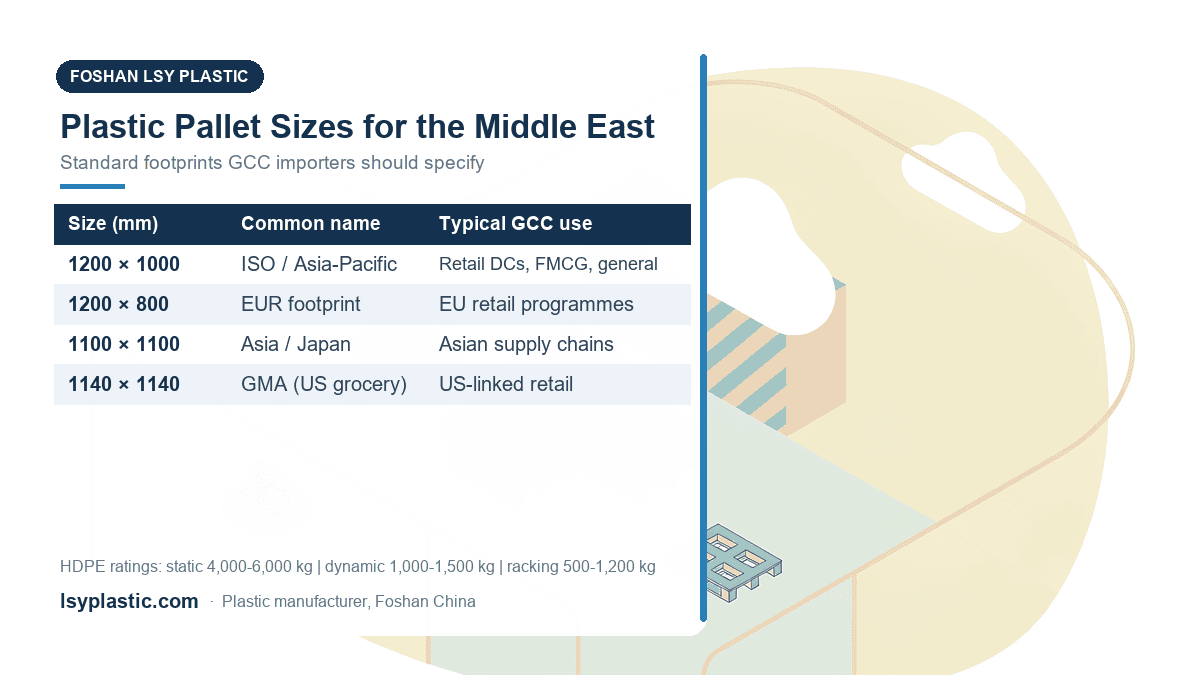
See the Pallet hub for the full range and specifications.
Plastic Pallet Price Ranges by Type
The table below summarizes typical factory price bands at full-container order quantities, ex-works China. Actual quotes vary with resin markets, which move with oil prices.
| Pallet type | Typical weight | Typical price (USD) | Best suited for |
|---|---|---|---|
| Nesting export pallet (9-leg, 1200×800) | 7–10 kg | 15–30 | One-way export, air freight, retail display |
| Light rackable, 3-runner (1200×1000) | 12–16 kg | 35–65 | General warehouse handling, light racking |
| Full-perimeter rackable (1200×1000) | 18–24 kg | 70–120 | Selective racking, automated lines, closed loops |
| Steel-reinforced rackable | 20–28 kg | 110–200 | High-bay racking, heavy dynamic loads |
| Hygiene / closed-deck food pallet | 17–25 kg | 80–160 | Food, pharma, cold chain |
| Drum spill containment pallet | 25–40 kg | 90–220 | Chemical storage compliance |
Treat any quote far below these bands with suspicion: it usually means thinner walls, lower-grade recycled resin, or a load rating that will not survive a year of real handling.
Virgin vs Recycled Material: How Much Can You Really Save?
Recycled resin is the fastest lever on price, but it changes performance. Reprocessed HDPE has slightly lower impact strength and more variable melt flow, which can show up as brittleness in cold stores. As a rule of thumb:
- 100% recycled: lowest price, ideal for one-way export where the pallet makes 1–3 trips.
- Blended (30–70% recycled): the volume sweet spot — 10–20% cheaper than virgin with service life adequate for most floor-storage fleets.
- 100% virgin: required for food-contact, pharmaceutical and consistent low-temperature performance.
Ask suppliers to state the recycled content in writing and to guarantee the load ratings with that blend. Some mills quietly raise recycled content to hit a price point, then the pallets fail in the field. A good comparison of the two base materials is in our HDPE vs PP pallet materials guide.
Price per Trip: Total Cost of Ownership Beats Sticker Price
A USD 18 nesting pallet used once and discarded costs USD 18 per trip. A USD 95 perimeter pallet that survives 150 warehouse cycles costs USD 0.63 per trip — before counting reduced product damage and zero nail splinters. This is why purchase price alone is a poor selection criterion for closed-loop operations. Build a simple model: divide landed unit cost by expected trips, then add per-trip costs for repair, disposal and product damage. Our pallet pooling vs buying cost model walks through this calculation with worked examples, and the returnable packaging ROI method applies the same logic to containers.
How Pallet Weight Affects Price — and Your Freight Bill
Weight hits you twice: in the pallet price and in freight. Air-exporting pallets on top of product is expensive, and even in sea freight, gross weight matters for inland legs. A 1.5 kg difference per pallet sounds trivial until you multiply it by 500 pallets and several annual shipments. This is why export buyers obsess over the weight-to-strength ratio and why we publish a full plastic pallet weight comparison by size and material. When comparing quotes, ask for the actual weighed weight, not the catalog weight — catalog figures are sometimes optimistic.
Container Loading: Why Pallet Design Changes Your Landed Cost
The pallet that fits more units per container has a lower landed cost per pallet, even at a higher unit price. Nesting nine-leg pallets stack into each other: a 40ft HQ can hold roughly 450–500 nesting 1200×800 pallets but only 150–200 flat-stacked rackable pallets of the same footprint. If you import pallets as part of a mixed load, the nesting design may free enough space for several hundred more saleable units. Our pallets-per-container loading guide shows the exact counts by pallet size and stacking method.
How to Get an Accurate Plastic Pallet Quote
Send suppliers this checklist and you will get comparable numbers on the first round instead of the third:
- Footprint (e.g., 1200×1000 mm) and deck height, or the rack beam lengths it must span.
- Static, dynamic and rack load requirements in kilograms — real ones, not aspirational.
- Entry type: 2-way or 4-way; pallet jack and forklift access needed on all sides?
- Deck type: open (ventilated, easy to wash) or closed (hygiene, small items).
- Material: acceptable recycled content; food-contact or cold-store requirements.
- Order quantity and destination port, so the supplier optimizes container loading.
For background on standards and dimensions, start with our Plastic Pallet FAQ Hub, and for the material-versus-material argument see plastic vs wooden pallets compared.
Looking for plastic pallets? Explore our Plastic Pallets range — injection molded in our own factory with 35+ years of experience.
Frequently Asked Questions
What is the average price of a plastic pallet?
For full-container factory orders, lightweight export pallets run USD 15–60, medium-duty rackable pallets USD 40–120, and heavy-duty or steel-reinforced models USD 120–300+. Retail single-unit prices in local markets are typically two to three times higher because they include distribution layers and small-quantity handling.
Why are plastic pallets more expensive than wooden pallets?
A wooden pallet is mostly cheap lumber plus nails and labor; a plastic pallet is polymer resin priced with oil, plus mold amortization. Plastic costs two to five times more upfront, but lasts 10–50 times more trips, needs no fumigation or ISPM 15 treatment, and does not splinter or absorb moisture. Over a fleet’s life, plastic usually wins on cost per trip.
Does buying in bulk reduce plastic pallet prices?
Yes, significantly. Price breaks typically appear at 100 units, 500 units and full container quantities. A full 40ft HQ order of nesting export pallets can be 20–40% cheaper per unit than a 100-piece order because molding runs, packing and shipping overheads are spread across more units.
How can I reduce the landed cost of plastic pallets?
Choose a nesting design to maximize container fill, accept an appropriate recycled content for your duty cycle, standardize on one footprint across your operation, and order in full containers. Also compare quotes on price per kilogram and price per trip rather than headline unit price — that is where the real savings hide.
Related reading: plastic pallets hub — pallet sizes, materials, load ratings and export guides.



