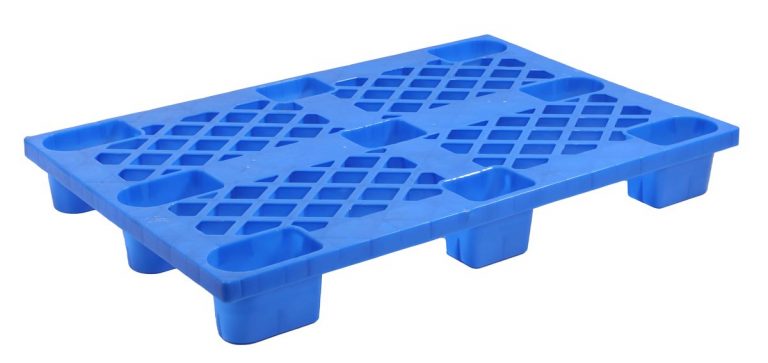
Cold storage and freezer warehouses are among the toughest environments for any pallet. Temperatures drop to -20°C or below, floors stay wet from thawing, forklifts run constantly, and any pallet failure means a load of expensive product hitting the concrete. Wood pallets splinter and absorb moisture; corrugated and paper products fail outright. Plastic pallets are widely regarded as the strongest fit for cold chains — but not every plastic pallet is equal, and choosing one without understanding low-temperature behavior is how warehouses end up replacing stock prematurely.
If you are shortlisting pallets, start with our guide to plastic pallet sizes and dimensions for export and warehousing.
This guide explains how plastic pallets behave in cold storage and freezer conditions, what load ratings actually mean at sub-zero temperatures, and how to build a shortlist that survives years of -20°C duty. For a broader overview of pallet styles and structures, our plastic pallets hub is a good starting point.
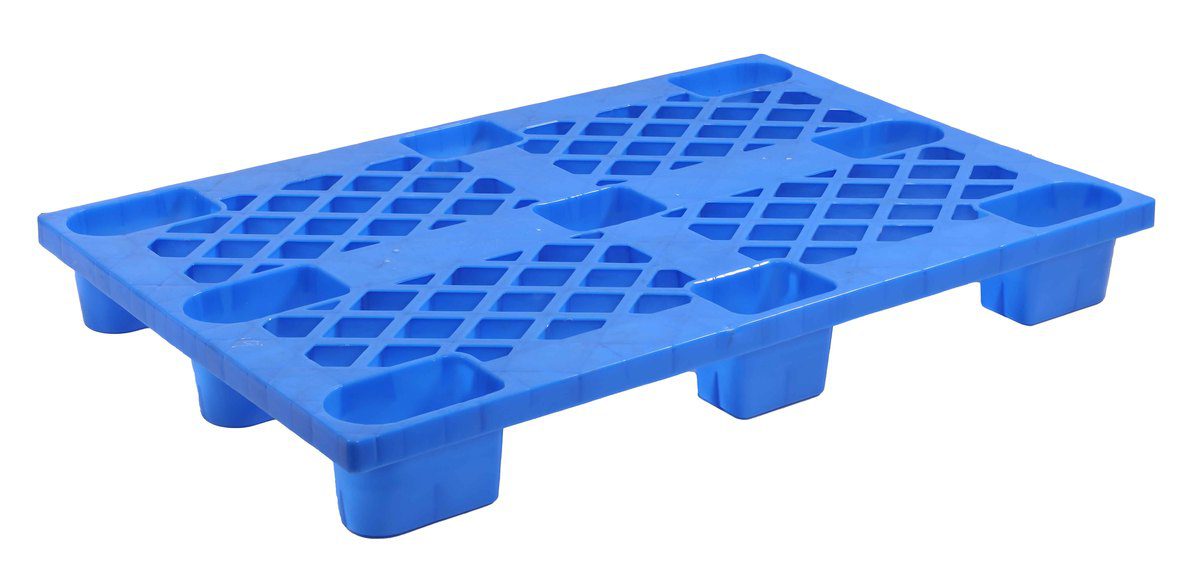
1. What Happens to Plastics in Cold Storage
Plastic is a polymer, and temperature changes how polymers respond to impact. At room temperature, both HDPE (high-density polyethylene) and PP (polypropylene) are tough and flexible enough to absorb fork impacts. As temperature drops toward -20°C, materials become stiffer and more brittle. The key difference is the glass transition temperature — the point below which a polymer loses its ductility and behaves more like glass under sudden impact.
- HDPE has a glass transition around -120°C, which means it retains meaningful impact resistance far below any practical freezer temperature. It is the default choice for cold storage pallets and crates.
- Polypropylene (PP) has a glass transition around -10°C to 0°C. Below that range, PP becomes noticeably more brittle under sharp impacts — dropped pallets, forklift strikes and cold-stack handling can produce cracking.
- Recycled or heavily filled compounds can perform worse than virgin resin in the cold. Ask for impact-modified or virgin-grade material when the pallet will live in a freezer.
If your application includes both cold storage and hygienic processing, the material comparison in our HDPE vs polypropylene pallets guide goes deeper into resin-level trade-offs.
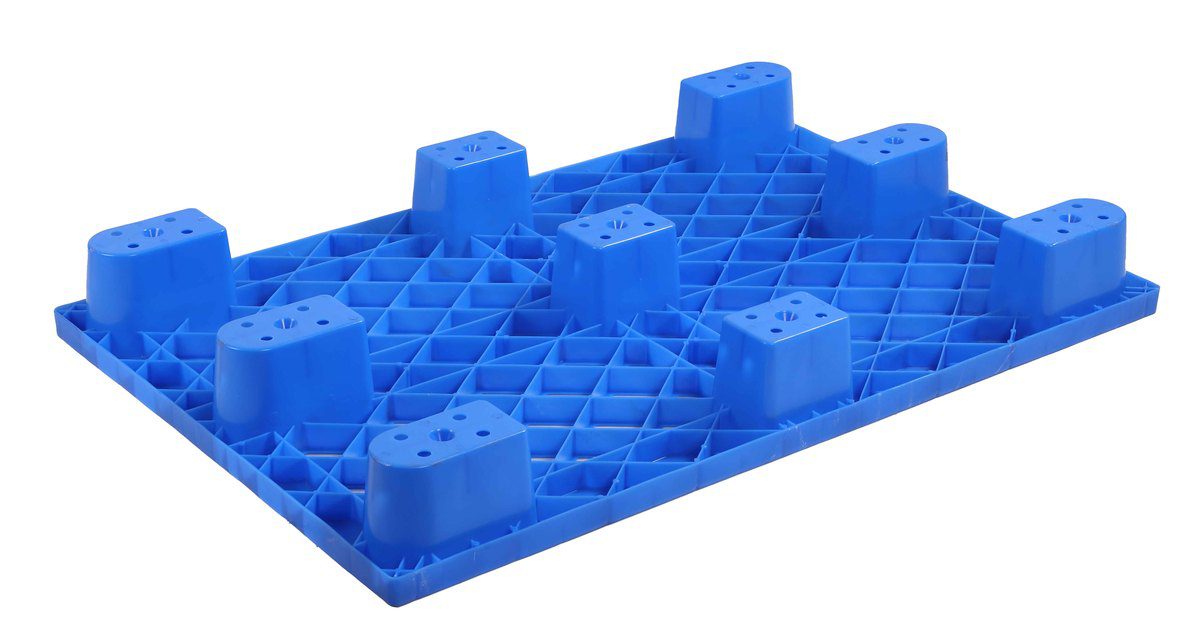
2. Freezer-Rated Load Ratings: What the Numbers Mean
Every pallet carries a static load, a dynamic load and, for rackable models, a racked load rating. Those numbers are normally measured at room temperature (23°C per ISO 8611 test conditions). In a -20°C freezer the same pallet can be stronger in some ways and weaker in others:
| Property | At 23°C | At -20°C |
|---|---|---|
| Stiffness (flexural modulus) | Baseline | Higher — pallet is more rigid |
| Impact toughness | Baseline | Lower for PP; HDPE stays ductile |
| Creep under constant load | Visible over time | Much lower — better dimensional stability |
| Slip behavior on wet floor | Standard | Worse if ice film forms on the deck |
In practice, a freezer pallet rated for 1,000 kg dynamic at room temperature is generally safe at that load in the freezer — often with extra stiffness — as long as the material is HDPE or an impact-modified blend and the pallet is not subjected to sharp corner impacts. The real risk in freezers is not the load; it is forklift strikes on brittle corners. Choose a pallet with reinforced corner geometry if your operation regularly handles frozen pallets.
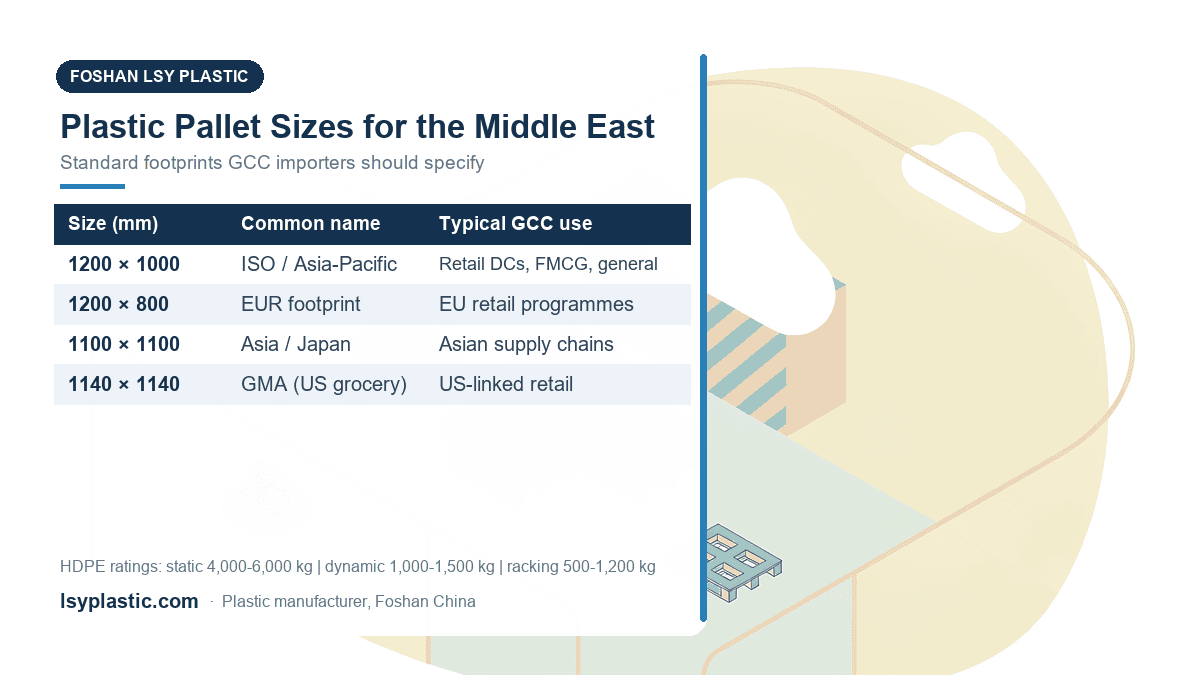
See the Food storage hub for the full range and specifications.
3. HDPE or PP: The Cold-Chain Answer
For dedicated freezer duty, HDPE is the safer resin. Here is the short version of what changes below 0°C:
- HDPE pallets — impact-resistant down to -40°C or lower in most virgin grades; can be washed with hot water and steam between uses; resists moisture absorption so pallets stay light and free of bacterial harborage.
- PP pallets — stiffer and more economical for room-temperature racking, but the brittle point sits close to typical freezer temperatures. If you must use PP in the cold, choose impact-copolymer PP and verify a cold-impact test report.
- Wood pallets in freezers — absorb moisture, splinter, grow mold and can transfer odors to food packaging. ISPM-15 heat treatment does not protect wood from freezer humidity. Our plastic vs wooden pallet comparison quantifies these differences.
For frozen-food producers and cold-chain logistics providers, the standard we recommend for pallets is impact-modified HDPE with a documented cold-impact test. If you are comparing structures, our nestable vs rackable pallet guide explains which frame geometry suits cold-chain storage density.
4. Freezer Pallet Applications by Industry
Frozen food & ice cream
Hygiene matters as much as temperature. HDPE pallets are washable, non-porous and can be sanitized with food-safe chemicals — see our pallet cleaning and sanitation guide for the exact procedures. They also eliminate the splinter and staple risk of wood near food packaging lines.
Pharmaceutical & cold-chain logistics
Temperature-sensitive pharmaceuticals are often moved through -20°C and even -80°C stages. For extreme cold, confirm the pallet compound is virgin HDPE and request the material data sheet (glass transition, cold impact) before purchasing. Insulated containers and temperature-controlled packaging also rely on pallets that stay dimensionally stable — a warp of a few millimeters can misalign automated systems.
Meat, seafood & dairy distribution
These facilities cycle between wet washing and freezing. HDPE pallets survive the thermal cycling and daily high-pressure washing better than any alternative. Seafood operations in particular benefit because HDPE does not absorb brine or odors.
5. Non-Slip and Safety Considerations in Freezers
Freezer floors are often icy and wet, which is why forklift and pallet jack safety gets more complicated in cold rooms. Look for pallets with textured or molded anti-slip deck surfaces, and keep in mind that ice film can reduce friction even on textured plastic. In racked freezer storage, follow the racking safety and load capacity guidance — the interaction between rack rails and pallet edges matters more when corners are cold and brittle.
6. Cold-Chain Pallet Selection Checklist
| Checklist item | Why it matters |
|---|---|
| Material is virgin or impact-modified HDPE | Ductility below -20°C |
| Cold-impact test report available | Proof, not promises, for freezer duty |
| Reinforced corners / edge geometry | Resists forklift strikes when brittle |
| Washable, non-porous surface | Hygiene between freezer and wash bay |
| Textured anti-slip deck | Safe stacking on icy floors |
| Documented load ratings at 23°C and below | Correct capacity planning |
| Supplier can state resin grade and origin | Avoids recycled-compound surprises |
7. FAQ: Plastic Pallets in Freezer Warehouses
Can plastic pallets be used at -30°C or lower? Yes, if they are made from virgin HDPE or an impact-copolymer blend rated for that temperature. Confirm the cold-impact test and material data sheet with the supplier. Most standard PP pallets should not be used below roughly -10°C for impact-prone handling.
Do plastic pallets get slippery in freezers? Molded-in texture helps, but ice film can still form on any surface. Use textured-deck pallets and keep rack lanes clear of frost accumulation.
Are plastic pallets more expensive than wood for cold storage? The upfront cost is higher, but wood pallets in freezers fail faster — moisture absorption, splintering and mold — which is why our cost-per-trip analysis usually shows plastic winning in cold chains within 12–24 months.
Can I wash a plastic pallet after freezer use? Yes — HDPE handles hot water, steam and food-safe detergents, which is a major advantage over wood in hygienic cold chains. Refer to the sanitation guide for chemical compatibility.
8. Get Freezer-Rated Pallets from the Factory
LSY Plastic manufactures HDPE and impact-modified plastic pallets for cold storage, frozen food and pharmaceutical cold chains, exporting worldwide from our Foshan facility with 35+ years of injection molding experience. We provide material data sheets, load test documentation and freezer-specific recommendations for your application. Contact us with your cold-room temperature and load requirements and we will recommend the right pallet.
Looking for plastic pallets? Explore our Plastic Pallets range — injection molded in our own factory with 35+ years of experience.