Learning how to secure palletized loads correctly prevents cargo damage, worker injuries, and costly claims. Each year, poorly secured loads cause millions of dollars in freight damage and remain a leading cause of warehouse and highway incidents. The good news: securing a load properly takes minutes with the right pallet, film, and technique. This guide walks through every step, from choosing the pallet base to final strapping.
Why Load Security Matters
An unsecured pallet load shifts during braking, acceleration, and rough road conditions. Load shifting leads to collapsed stacks, crushed product, and blocked aisleways. In transit, shifted loads are a serious road hazard. In the warehouse, an unstable load can fall onto workers or equipment. Beyond safety, insurance carriers increasingly require documented load-securing procedures before paying damage claims.
Start from the ground up: the pallet itself. Our plastic pallet load capacity guide explains how much weight a pallet can safely carry, and our forklift safety guide covers safe handling from pick-up to placement.
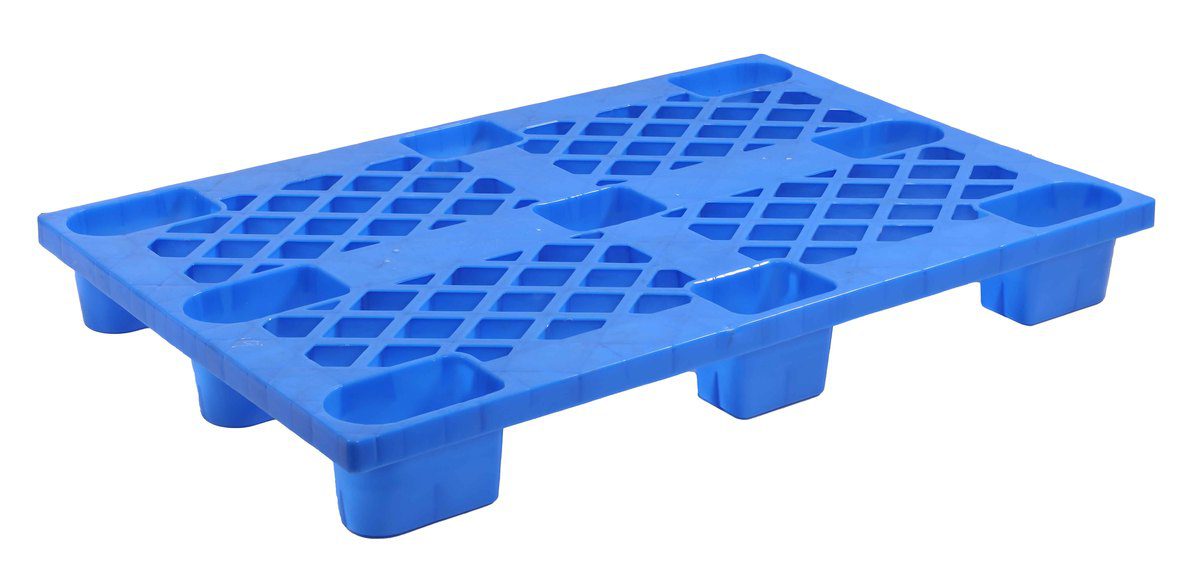
Step 1: Start With the Right Pallet Base
Load security begins with the pallet. A warped, cracked, or undersized pallet undermines every other securing step. Check these points before building a load:
- Condition: no cracked decks, broken feet, or protruding hardware. See our pallet inspection checklist for the full walk-around.
- Size: the pallet must be larger than the carton footprint, not smaller. Use our pallet size and dimension guide to match pallet to product.
- Weight rating: confirm the load stays within the pallet’s dynamic rating for forklift travel. Reference the pallet weight and capacity guide.
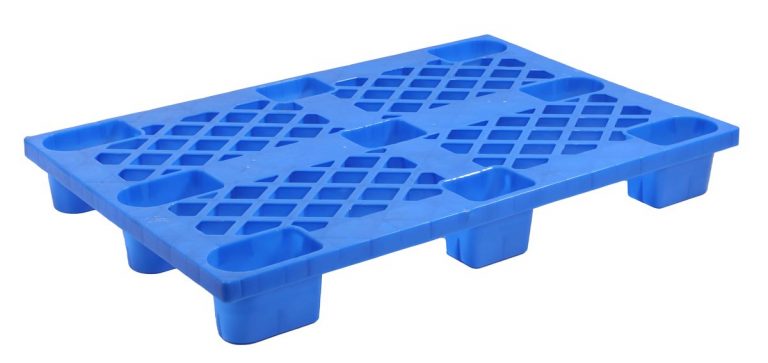
- Material: HDPE and polypropylene pallets resist moisture and hold their shape, which keeps loads stable in humid or cold environments. Compare materials in our HDPE vs PP pallet comparison.
Step 2: Build a Stable Unit Load
How boxes are stacked matters as much as how they are wrapped. Follow these rules:
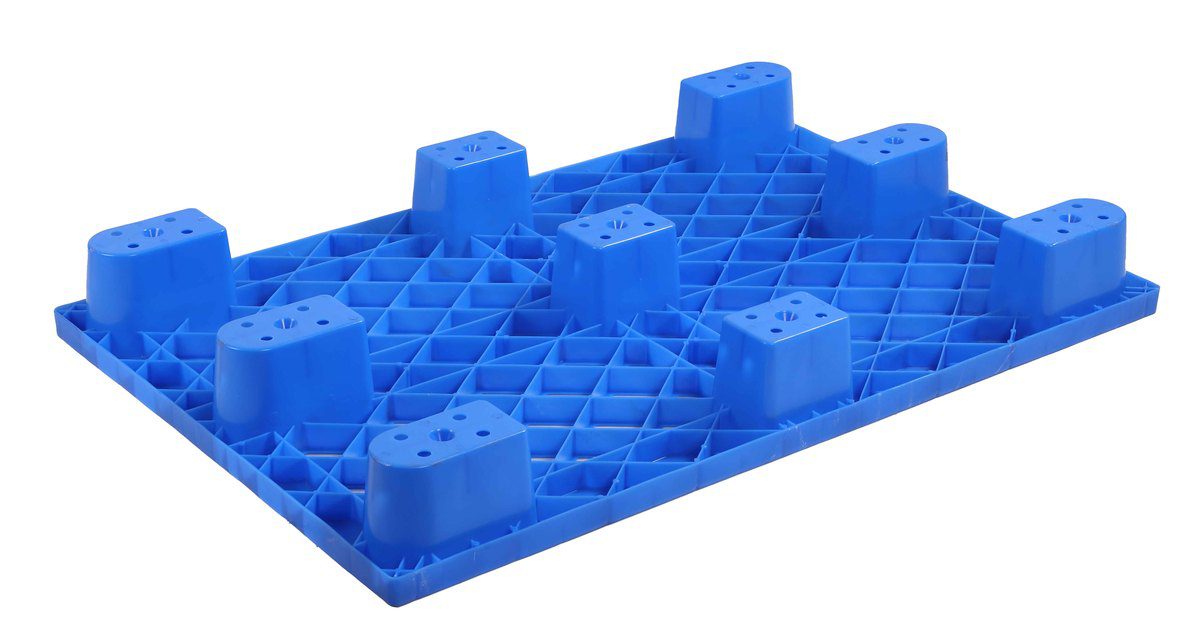
- Interlock the pattern: stagger box seams like a brick wall instead of stacking straight columns. Interlocking spreads weight and prevents the stack from shearing sideways.
- Even weight distribution: place heaviest boxes at the bottom, center of mass low and centered. Uneven loading makes a pallet tip during lifting.
- Full layers: fill each layer completely. Gaps let boxes settle and tilt. Use dunnage or filler cartons for partial layers.
- Height control: keep total height within racking and trailer limits, typically under 6 feet for stable hand-wrapping. Tall narrow loads need extra reinforcement.
For tall loads, nestable pallets can reduce storage height between uses but do not change the in-transit stability rules. Compare nestable vs rackable pallet designs before choosing.
Step 3: Stretch Wrap the Load
Stretch film is the primary securing method for most pallet loads. It locks cartons together and to the pallet. Apply it correctly:

- Lock the base: wrap 2 to 3 revolutions around the bottom of the load, wrapping film around the pallet deck itself. This anchors the load to the pallet.
- Climb and wrap: spiral upward at 50 percent overlap per revolution. The overlap creates a continuous film cage.
- Top coverage: wrap the top corners, then spiral back down to the bottom for a double layer on the lower third, where loads take the most stress.
- Cut and tuck: cut the film and tuck or rub the tail flat so it does not snag on forklift tines or racking.
- Use corner boards: vertical edge protectors prevent film tears and stiffen the load corners, especially for heavy or tall loads.
Machine wrapping applies more consistent tension than hand wrapping and is recommended for high-volume operations. If loads will travel in cold storage or freezer environments, use film rated for low temperatures so it does not become brittle.
Step 4: Add Strapping for Heavy or Fragile Loads
Stretch film alone is not enough for heavy loads, high-value goods, or long-haul transit. Add polypropylene or steel strapping:
- Use 2 vertical straps on standard loads; add a third for loads over 1,000 kg or tall stacks.
- Place edge protectors under every strap to prevent cutting cartons.
- Tension straps firmly but avoid crushing the product; re-check tension before departure and at transfer points.
Strapping works with the load’s structural strength. For loads on pallet racks, remember that racked loads are not moved by strapping tension — the pallet deck carries the weight.
Step 5: Use Anti-Slip Materials Between Layers
Cartons with glossy or waxed surfaces slide easily on each other and on smooth pallet decks. Options to increase friction:
- Anti-slip sheets: corrugated or rubberized sheets placed between layers add grip and even out surface pressure.
- Anti-slip spray or glue: a light application on each layer prevents lateral movement without damaging cartons.
- Textured pallet decks: some LSY pallets feature molded grip surfaces that hold cartons in place. Ask about deck options when requesting a quote.
Friction aids matter most in plastic pallet operations, because smooth plastic surfaces can be slicker than rough wood.
Step 6: Handle Special Cases Correctly
Export and Ocean Freight
Ocean shipments endure vibration, stacking, and temperature swings. Use heavier film, add straps, and consider shrink wrapping for full encapsulation. Plastic pallets are ISPM-15 exempt, so export loads avoid the quarantine risk of wood.
Mixed or Partial Loads
Different box sizes on one pallet create weak points. Group same-size cartons, use filler layers, and brace tall items with dunnage bags or cardboard dividers before wrapping.
Cold Chain
Freezer environments change film behavior and add condensation. Use cold-rated film, let loads acclimate before wrapping to reduce frost, and re-tension straps at destination if possible. Our cold storage pallet guide covers material selection.
Common Load-Securing Mistakes
| Mistake | Risk | Fix |
|---|---|---|
| Straight-stack column loading | Load shears sideways in transit | Interlock layers |
| Film not locked to pallet deck | Whole load slides off pallet | 2-3 base revolutions around deck |
| Overweight pallet | Pallet failure, crushed bottom boxes | Check dynamic/static ratings |
| Worn or brittle film | Film breaks mid-transit | Store film properly, use cold-rated types |
| No edge protectors under straps | Straps cut into cartons | Always install corner protectors |
| Unstable pallet base | Whole load shifts | Inspect pallet before loading |
Final Pre-Dispatch Checklist
Run through this checklist before the load leaves the dock:
- Pallet inspected and undamaged
- Boxes interlocked, heaviest at the bottom
- Load within pallet dynamic rating
- Film locked to the deck, full spiral coverage, tail tucked
- Straps installed with edge protectors where required
- Anti-slip aids used on smooth surfaces
- Height and width within trailer and racking limits
- Load photographed for the record
Conclusion
Securing palletized loads is a repeatable process: right pallet, stable stack, proper stretch wrap, strapping for heavy goods, and anti-slip materials where needed. Done consistently, these steps cut damage claims, protect workers, and speed up dock operations.
LSY Plastic manufactures injection-molded HDPE and PP pallets in standard and custom sizes, including textured-deck options for better load grip. Pallet dimensions, weights, and load ratings are available in our pallet dimensions guide and 2026 price guide. For more on reducing warehouse handling injuries, read our warehouse ergonomics guide.
Request a quote today: WhatsApp +86 19311059570 | Email fstyx01@lsyplastic.com
Ready to compare options? Browse our Plastic Pallets range for plastic pallets.
Frequently Asked Questions
What are the key steps to secure a pallet load?
Start with the right pallet base, build a stable square unit load, stretch-wrap from the bottom up, add strapping for heavy or fragile loads, use anti-slip sheets between layers, and finish with a pre-dispatch check. Securing a load properly takes minutes with the right pallet, film and technique.
Stretch wrap or strapping, which do I need?
Stretch film holds the load together and keeps dust out; strapping adds vertical compression for heavy, tall or valuable loads. Many shipments need both, with film for unitisation and straps tethered to the pallet for heavy items.
How do I stop loads shifting in transit?
Eliminate gaps, keep the load square and to the pallet edge, use anti-slip sheets between layers and corner boards on top, and strap vertically so the load is tied to the pallet. Interlocked stacking also reduces movement.
What is the most common load-securing mistake?
Under-wrapping and leaving overhang. A load that overhangs the pallet edge gets crushed and destabilised, and too few film wraps let it shift. Wrap the film down to the pallet itself so the load and base move as one unit.